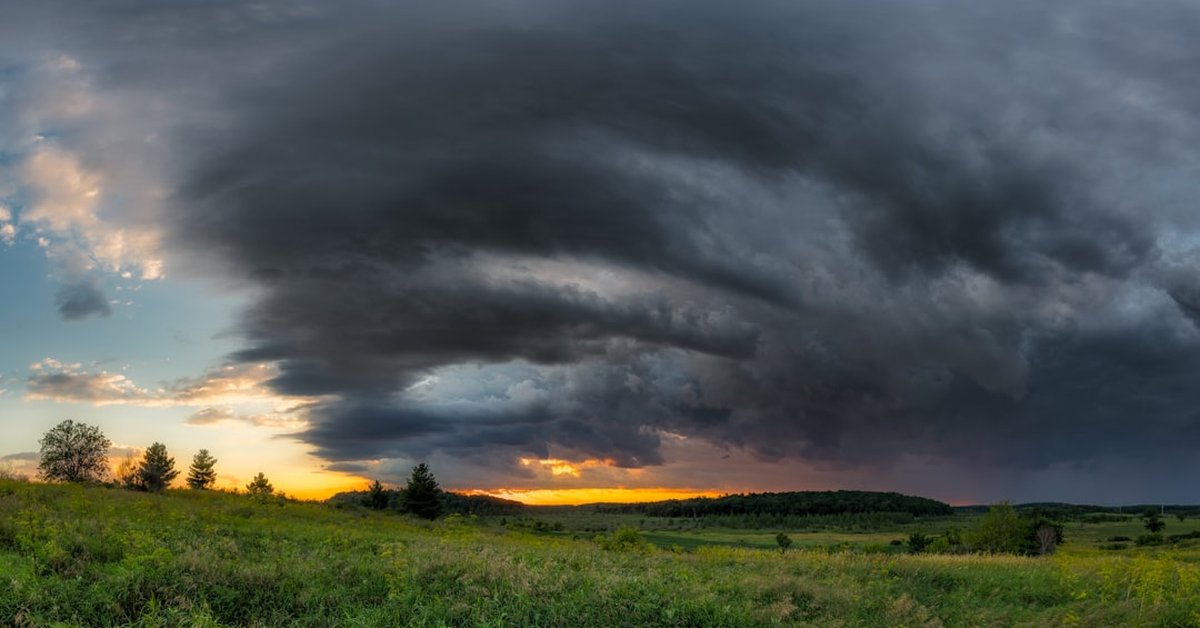




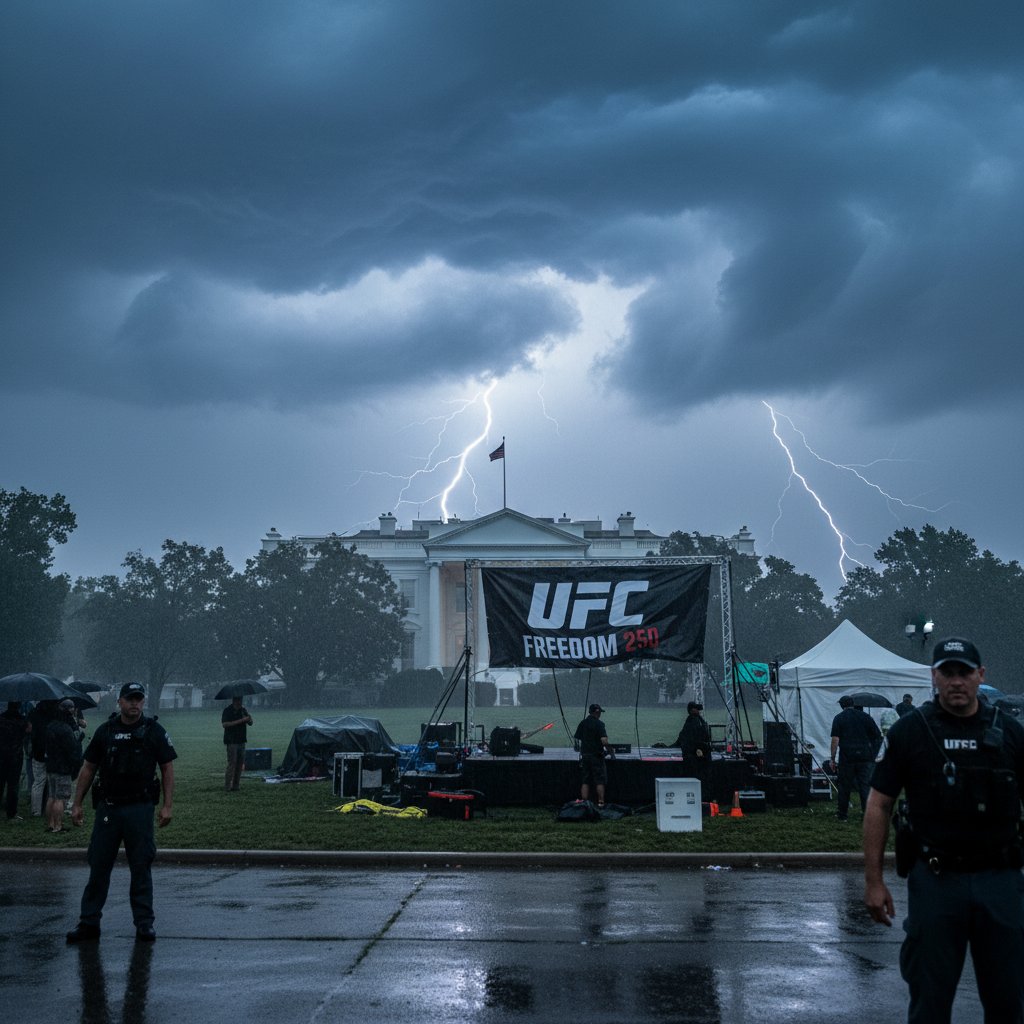
The skies over the nation’s capital darkened ominously on Saturday afternoon as a severe thunderstorm threat loomed over the UFC White House Freedom 250 event, a high-profile mixed martial arts spectacle that had drawn thousands of fans and dignitaries to the National Mall. What began as a sun-drenched celebration of athleticism and patriotism quickly turned into a tense standoff with nature, as meteorologists tracked a line of supercell thunderstorms bearing down on Washington, D.C.
By 2:30 PM, the air grew heavy and still. The humidity climbed. And then, the first distant rumble of thunder rolled across the Potomac River. For event organizers, the UFC brass, and the hundreds of thousands of fans packing the outdoor venue, it was a moment of reckoning. The Freedom 250, commemorating 250 years of American independence, was not just a fight card—it was a symbol. And now, the weather was threatening to steal the show.
Meteorological Mayhem: The Storm System
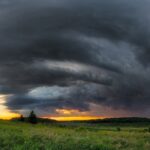
The storm system responsible for this threat originated in the Ohio Valley, where it had already triggered tornado warnings in parts of Indiana and Ohio earlier in the day. By the time it reached the Mid-Atlantic, it had organized into a powerful squall line, packing wind gusts of up to 70 miles per hour, frequent cloud-to-ground lightning, and the potential for localized flash flooding.
Dr. Rebecca Torres, a senior meteorologist with the National Weather Service in Sterling, Virginia, explained the situation in stark terms. “This is a classic setup for severe thunderstorms in the D.C. area during late summer. We have a cold front pushing into a hot, humid air mass, and the result is explosive thunderstorm development. The timing could not be worse for an outdoor event of this scale.”
The National Weather Service issued a Severe Thunderstorm Watch for the District of Columbia and surrounding counties at 1:45 PM, effective until 9:00 PM. The watch covered a population of over 6 million people, including the entire event footprint. For the UFC, which had invested millions in staging the Freedom 250, the watch was a red flag.
Human Impact: Fans, Fighters, and First Responders
For the fans who had traveled from across the country to witness history, the thunderstorm threat was a gut punch. Many had camped out overnight to secure prime viewing spots near the main octagon, which had been erected on a temporary stage near the Washington Monument. The atmosphere shifted from electric anticipation to anxious uncertainty.
“I drove 12 hours from Chicago for this,” said Marcus Jennings, a 34-year-old construction worker who had brought his two teenage sons. “We’ve been planning this trip for months. Now we’re just sitting here, watching the sky, hoping it doesn’t get canceled. It’s heartbreaking.”
For the fighters, the stakes were even higher. The Freedom 250 card featured several championship bouts, including a highly anticipated heavyweight title fight between reigning champion Jon “The Predator” Silva and challenger Marcus “The Hammer” O’Brien. Both fighters had trained for months, and the prospect of a delay or cancellation was devastating.
“We’re ready to go, regardless of the weather,” Silva said in a pre-event press conference, his voice steady but his eyes betraying concern. “But you can’t fight lightning. You can’t fight a tornado. Mother Nature is the ultimate boss, and sometimes you just have to tap out.”
First responders and event security teams were on high alert. The UFC had contracted with a private weather monitoring service, and liaison officers were in constant contact with the D.C. Office of Emergency Management. Evacuation plans were drafted and rehearsed. Medical tents were reinforced. The goal was clear: protect lives, no matter what the storm brought.
Historical Context: Weather and Outdoor Spectacles
The Freedom 250 thunderstorm threat is not an isolated incident. Outdoor mega-events have long been at the mercy of the elements. In 2019, the Woodstock 50 festival was canceled due to severe weather and logistical issues. In 2023, the Indianapolis 500 was delayed for hours by lightning. Even the Super Bowl, typically held in domed stadiums or warm-weather cities, has faced weather-related disruptions.
But the UFC White House event carries unique historical weight. The Freedom 250 was conceived as a celebration of American resilience and unity, timed to coincide with the nation’s semiquincentennial. The White House itself was a backdrop, with President and First Lady expected to attend the main card. The symbolism was deliberate: the UFC, once a fringe spectacle, had become a mainstream cultural force, and the event was a testament to its rise.
Now, that symbolism was colliding with the raw power of nature. For Dr. Torres, the storm was a reminder that even the most carefully planned events are vulnerable. “We have incredible technology and forecasting capabilities, but we still can’t control the weather. The best we can do is prepare, communicate, and make decisions based on data. That’s what the UFC is doing right now.”
What This Means for the Reader: A Broader Warning
The thunderstorm threat at the Freedom 250 is more than a headline. It is a case study in the growing risks posed by extreme weather in a warming climate. According to the National Oceanic and Atmospheric Administration, the frequency of severe thunderstorm events in the eastern United States has increased by 20% over the past 30 years. Warmer temperatures and higher humidity create more energy for storms, making them more intense and more unpredictable.
For readers in the U.S., UK, and Canada, this event is a warning. Outdoor events of all kinds—from music festivals to sporting matches to weddings—are increasingly at risk. The old assumptions about “safe” seasons and locations are breaking down. The Freedom 250 thunderstorm threat is a microcosm of a larger truth: we must adapt to a more volatile atmosphere.
As of 6:30 PM, the storm had not yet arrived over the National Mall. The leading edge of the squall line was still 20 miles to the west, moving at 30 miles per hour. Event organizers had made the difficult call to delay the main card by two hours, hoping the worst of the weather would pass before the headline fights. Fans huddled under tarps and umbrellas, their phones glowing with weather alerts.
The Freedom 250 will go on, one way or another. But the thunderstorm threat has already left its mark. It has tested the resilience of organizers, the patience of fans, and the limits of human planning. And it has reminded us all that, no matter how powerful we become, the sky still holds the final say.