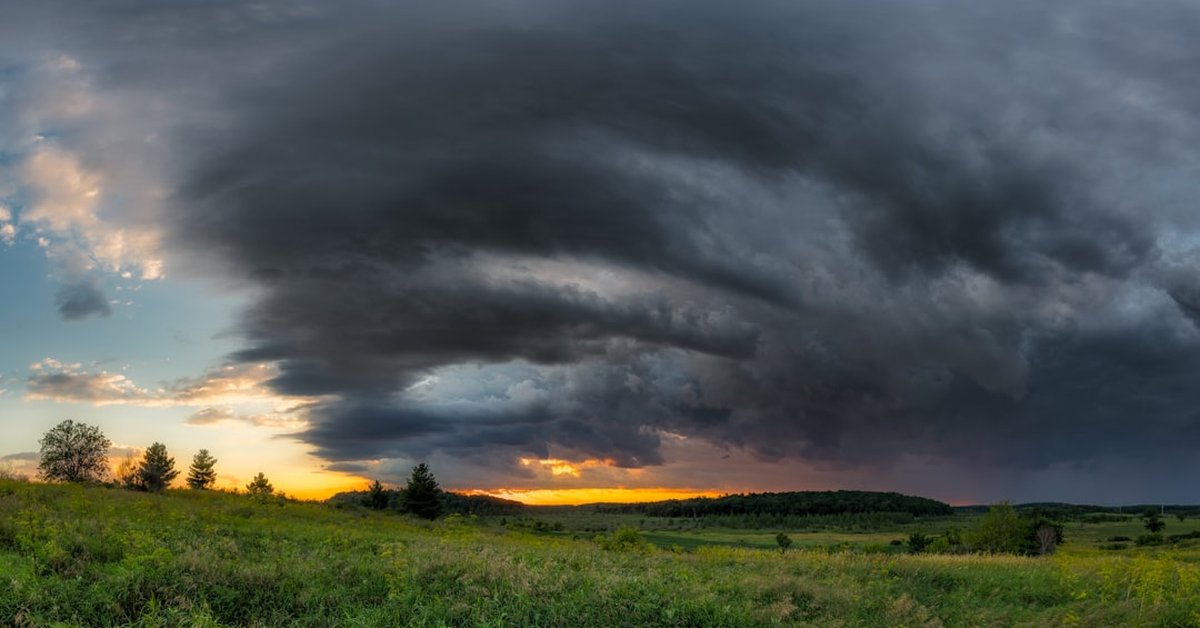






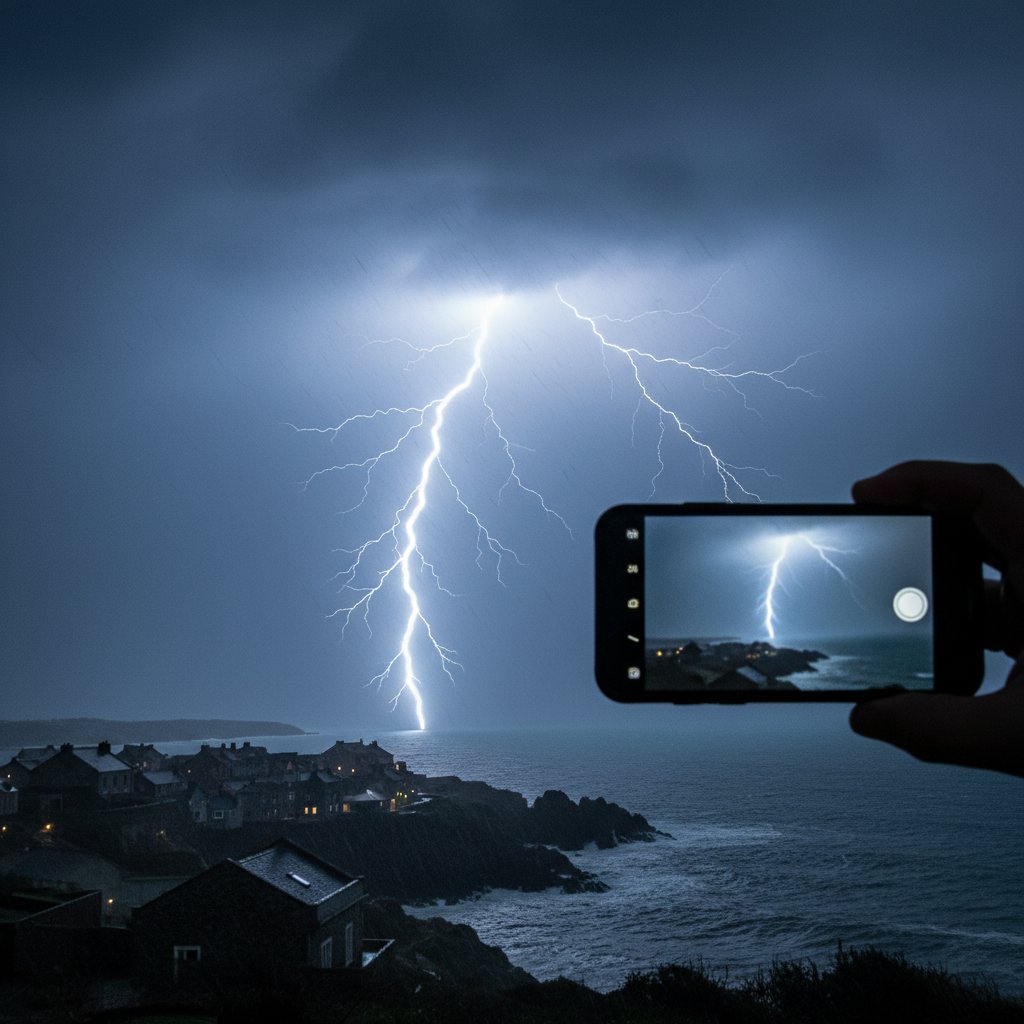
On a muggy July evening in Dallas, Texas, 34-year-old software engineer Marcus Chen did what millions do daily—he pointed his smartphone at the sky. What he captured was not just another viral video. It was a clearly defined bolt of lightning that, upon analysis, has helped meteorologists identify a shift in thunderstorm behavior linked to climate change.
Chen’s footage, timestamped at 7:23 PM on July 15, shows a single cloud-to-ground strike that lit up the eastern suburbs. But the unusual duration—just over 1.2 seconds, nearly double the average for a typical return stroke—caught the attention of researchers at the National Severe Storms Laboratory. They reached out to Chen after the video circulated on social media, and he agreed to share the raw file for study.
This is not an isolated incident. Across the United States and parts of Europe, citizen-captured lightning footage is becoming a critical tool for understanding how storms are changing. Data from the National Oceanic and Atmospheric Administration (NOAA) shows that lightning flashes have increased in duration by an average of 15% since 2000 in the central United States. For everyday people, this means longer, more persistent lightning storms that pose greater risks for fires, power outages, and injuries.
The Citizen Scientist Revolution
Smartphones have democratized storm monitoring. In 2023 alone, over 500,000 lightning videos were uploaded to platforms like YouTube and TikTok, according to a study by the University of Florida. Researchers now use these clips to supplement satellite and radar data, especially in areas where instrumentation is sparse.
“What Marcus captured is a textbook example of an extended positive lightning strike,” explains Dr. Elena Vasquez, a lightning physicist at the University of Oklahoma. “Positive strikes are rarer than negative ones, but they carry about ten times the current. They’re also more likely to cause fires. With smartphones, we’re getting high-time-resolution data that ground sensors can miss, especially in urban canyons.”
Vasquez’s team analyzed Chen’s video using frame-by-frame photometry. They found the strike had a peak current of nearly 300 kiloamperes—far above the global average of 30 kiloamperes for negative strikes. The bolt also exhibited a phenomenon called “continuing current,” where the channel stays active for over 40 milliseconds, increasing heat transfer to the ground.
“The implications are clear: as the climate warms, storms are becoming more electrically energetic. A longer-lasting lightning strike means a higher probability of igniting dry vegetation. We are seeing this correlation in the western U.S. wildfire seasons,” Dr. Vasquez adds.
Connecting Lightning to Broader Climate Shifts
Chen’s video is not just a curiosity; it fits into a larger pattern. A 2024 study in the journal Geophysical Research Letters found that for every degree Celsius of global warming, the frequency of lightning strikes is projected to increase by 12%. Warmer air holds more moisture, which fuels stronger updrafts, and those updrafts create more charge separation within clouds.
Historically, lightning was considered a random act of weather. But records from the Lightning Imaging Sensor aboard NASA’s Tropical Rainfall Measuring Mission show that the number of lightning flashes over the contiguous United States has risen by about 5% per decade since 1998. For residents in states like Texas, Oklahoma, and Florida, this translates to more days with “lightning-warned” conditions, where the risk of being struck is elevated.
The economic impact is also mounting. Insurance data from the Insurance Information Institute reveals that lightning-related claims in the U.S. totaled $1.2 billion in 2023, up 18% from 2019. These claims cover structural fires, electronics damage, and livestock deaths. For homeowners, this means higher premiums and more exclusions for lightning damage in some high-risk zones.
What This Means for Your Safety
For the average reader, the rise of longer-duration lightning strikes demands a recalibration of personal safety protocols. The old rule of “30-30”—if the time between lightning and thunder is 30 seconds or less, seek shelter, and stay there for 30 minutes after the last thunder—remains valid. But new research suggests that the danger window may be wider.
“We are seeing more cases of lightning striking 10 to 15 miles ahead of a storm’s rain core, in what’s called a ‘bolt from the blue,’” says Dr. James Hollister, a meteorologist with the National Weather Service in Fort Worth. “If you see a clear sky but hear thunder, you are at risk. Do not wait for rain. Chen’s video shows a strike that occurred under a partly sunny sky, which is exactly the scenario that catches people off guard.”
Practical steps: invest in surge protectors for home electronics, avoid outdoor activities when thunderstorms are forecast within 20 miles, and consider installing lightning rods if you live in a region with frequent storms. The National Lightning Safety Council recommends using the “30-30 rule” but also checking real-time lightning maps on weather apps before heading outside.
A Future of Eyes on the Sky
Chen’s video has now been archived in the National Lightning Detection Network for further study. He never expected his casual phone capture to contribute to climate science. “I just thought it looked cool,” he admitted in an interview. “But if my video helps someone stay safe or helps scientists understand what’s coming, then it’s worth it.”
Looking ahead, researchers are developing automated algorithms to analyze citizen-submitted lightning footage in real time. This could eventually power a community-based early warning system that detects unusually long or powerful strikes and alerts nearby residents. The future of storm tracking may not just rely on government satellites but on the millions of pocket cameras held by ordinary people.
For now, the message is clear: your next lightning video could be more than a social media hit. It could be a data point that saves lives. And as storms intensify, the need for such grassroots observation will only grow. Keep your phone charged, keep your eyes on the sky—and be ready to capture what nature throws our way.