






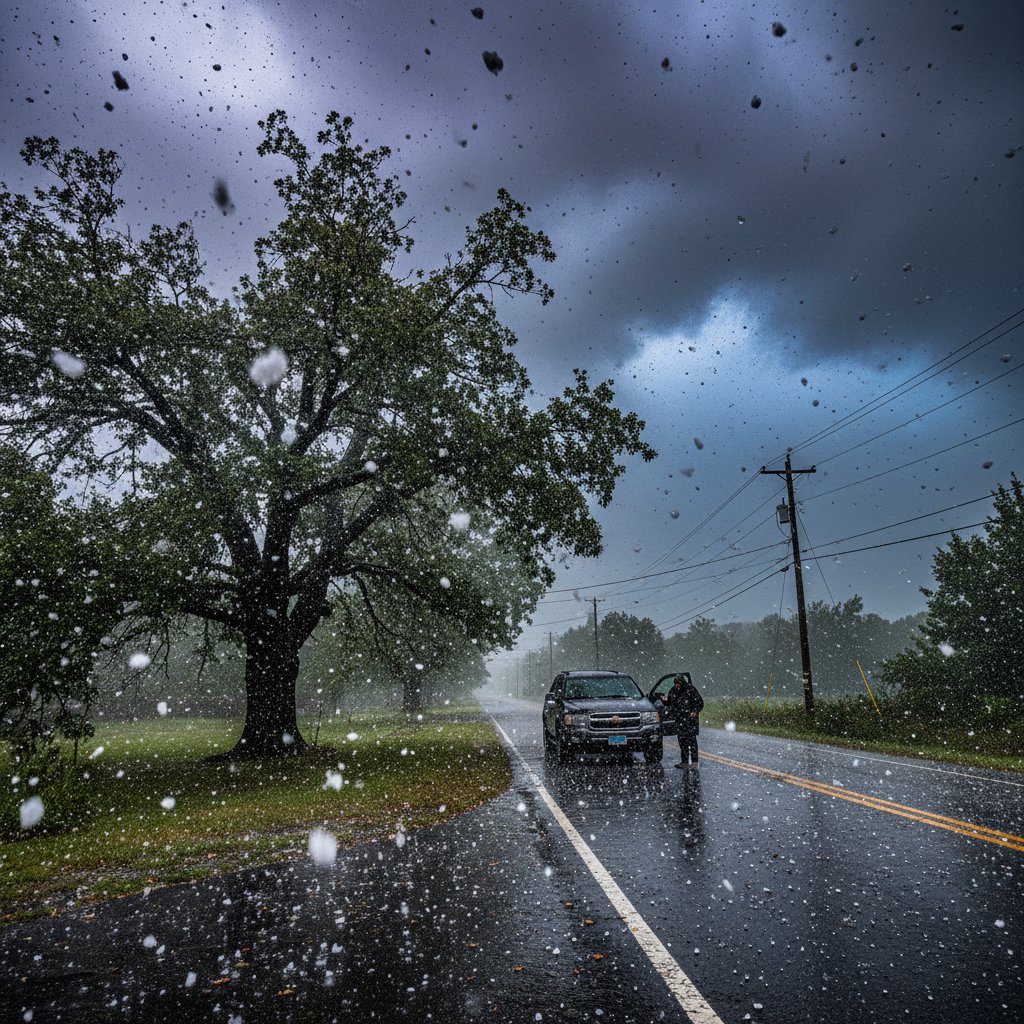
For the residents of Pawling, New York, the afternoon of June 11, 2026, started like any other—until the sky turned an ominous green at 4:30 PM. Within minutes, a violent hailstorm swept through this Hudson Valley community, leaving behind a trail of shattered windows, battered cars, and stunned families. For many, the storm wasn’t just a weather event; it was a life-altering catastrophe.
“I’ve lived here for 40 years and I’ve never seen anything like it,” said Martha Kellogg, a Pawling resident who watched hail the size of golf balls pummel her home. “It sounded like someone was throwing rocks at the house. My car is totaled. My roof is gone. I don’t know where to start.”
Golf-ball-sized hail—officially measured at 1.75 inches in diameter by the National Weather Service—fell for nearly 20 minutes, driven by winds that gusted over 60 mph. The storm tore through a swath of Dutchess County, with Pawling taking the brunt. Local hospitals reported at least a dozen minor injuries from broken glass and falling debris, though no fatalities. But the economic and emotional toll is just beginning to surface.
A Sudden Turn: From Calm to Catastrophe
The storm arrived with little warning. The National Weather Service had issued a severe thunderstorm watch earlier that afternoon, but few expected hail of this magnitude in early June. “Hail events in the Northeast are not rare, but golf-ball-sized hail in the middle of June is highly unusual,” said Dr. Emily Hanson, a meteorologist at the State University of New York at Albany. “This storm had a powerful updraft that kept the hailstones suspended long enough to grow to that size. It’s a sign of how volatile our weather patterns are becoming.”
As the hail began, residents scrambled for cover. At the Pawling Recreation Center, children’s soccer practice was cut short. “We saw the sky darken and heard the thunder, but when the first hail hit the field, it was terrifying,” recalled coach Tom Ricci. “We herded the kids into the gym. A few of them were crying. Some of the older players had welts on their arms from the hail.”
The storm left an unmistakable mark on the landscape. Trees were stripped of leaves, gardens were shredded, and roads were covered in a layer of ice that resembled a snowstorm in June. In some neighborhoods, hail piled up to three inches deep, making travel impossible for hours. Emergency services reported over 200 calls for help, primarily for roof damage and broken windows.
The Human Toll: Lives Disrupted by Hail
Beyond the immediate damage, the storm has upended daily life for thousands in Pawling and surrounding communities. With roofs compromised, many homes are at risk of water damage from forecasted rain in the coming days. Insurance adjusters are already overwhelmed. “We’re seeing a surge in claims unlike anything we’ve handled since the 2023 hailstorms in Texas,” said James Carter, a regional claims manager for State Farm Insurance. “But for this area, it’s unprecedented. People are calling in a panic, and we’re doing our best to triage.”
Small businesses in downtown Pawling were hit hard. Glass storefronts shattered, exposing inventory to the elements. The historic Pawling Theatre, a local landmark, suffered significant roof damage. “We had to close for the foreseeable future,” said owner Linda Pruitt. “The hail punched holes in the roof, and water is leaking into the auditorium. Our seats are ruined. It’s devastating.”
For homeowners, the financial strain is immediate. Roof replacements in the Hudson Valley can cost between $8,000 and $15,000, and with demand skyrocketing, contractors are booking weeks out. Many residents lack comprehensive insurance or face high deductibles. “My deductible is $5,000,” said Mark Delgado, a teacher whose car looks like a golf ball. “I can’t afford that right now. I don’t know what I’m going to do.”
“We’re seeing a surge in claims unlike anything we’ve handled since the 2023 hailstorms in Texas. But for this area, it’s unprecedented.” – James Carter, State Farm Insurance regional claims manager
Why So Severe? The Science Behind the Storm
Meteorologists are still analyzing the storm, but early data points to a powerful supercell thunderstorm that developed along a warm front moving through New York. Dr. Hanson notes that the atmosphere was primed with high instability and wind shear, creating ideal conditions for hail formation. “The hail grew in multiple layers within the storm, suggesting it was recycled through the updraft several times,” she explained. “That’s why we saw such large stones.”
But the unprecedented nature of this event has also raised questions about climate change. While it’s difficult to attribute any single storm to global warming, scientists say a warming atmosphere can hold more moisture and energy, potentially intensifying storms. “We are seeing an increase in extreme hail events in regions that historically haven’t experienced them,” said Dr. Leon Foster, a climate researcher at Columbia University. “New York is not known for golf-ball hail, but this might become more common if our climate continues to warm.”
The Pawling storm also produced a brief but intense downpour, causing localized flash flooding in low-lying areas. Roads were washed out near the Appalachian Trail crossing, and several cars were stranded. No injuries were reported from the flooding, but it compounded the chaos for emergency responders already dealing with hail damage.
What Comes Next: Recovery and Preparedness
In the days ahead, Pawling will grapple with recovery. The town has declared a state of emergency, allowing state resources to be deployed. The Red Cross has set up a shelter at the local high school for those whose homes are uninhabitable. Cleanup crews are working around the clock to remove debris and assess structural damage.
For the community, the storm is a wake-up call. “We need to be better prepared for these events,” said Pawling Town Supervisor David Green. “We’re looking into early warning systems and community shelters. This can’t happen again without us being ready.”
But preparedness comes at a cost. Many residents are now facing the reality that their insurance may not cover all the losses. The storm has exposed gaps in coverage, particularly for older homes with outdated roofs. For those without savings, the road to recovery will be long.
As the sun sets over Pawling, the sound of hammers and the hum of generators replace the roar of hail. Neighbors help neighbors, sharing tarps and offering shelter. But the memory of that terrifying June afternoon will linger. “I’ll never look at a cloudy sky the same way again,” Martha Kellogg said, clutching a dry cleaning bag she’s using to protect her furniture from dripping water. “We thought we were safe here. Now we know better.”
Looking ahead, this storm may serve as a cautionary tale for communities across the Northeast. As severe weather events become more erratic and intense, the need for adaptation grows urgent. The hailstorm in Pawling is not just a local disaster—it’s a glimpse of a future that may arrive sooner than we think.