




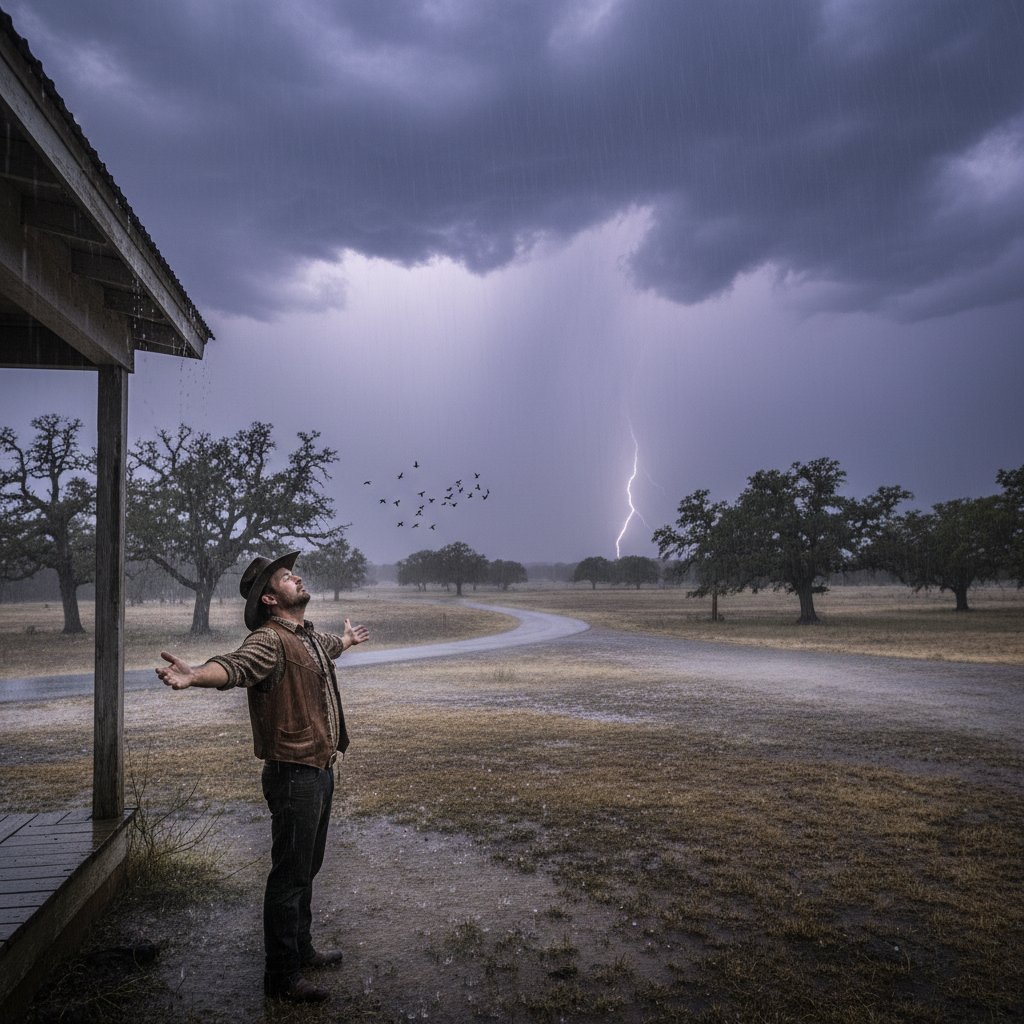
The air thickens. A faint, earthy sweetness wafts through the breeze. Before the first drop falls, you smell it: rain. That distinct, almost nostalgic scent—scientifically known as petrichor—has captivated poets and farmers for centuries. But for meteorologists and climate watchers, that smell is more than just a pleasant prelude to a shower. It is a complex chemical signal, one that, in an era of intensifying storms, carries a hidden warning.
Petrichor is not the scent of water itself. Water is odorless. Instead, it emerges from a delicate dance between soil, plants, and the electrical fury of a storm. As raindrops hit dry ground, they trap tiny air bubbles. These bubbles shoot upward, bursting into a fine aerosol that carries the scent compounds. The result is a perfume of ozone, plant oils, and bacterial spores.
But here’s the twist: the stronger the petrichor, the more volatile the system may be. Researchers are now linking the intensity of this smell to the severity of approaching storms. For readers from the US to the UK and Canada—regions increasingly battered by flash floods and cyclonic winds—understanding petrichor could be a matter of safety.
The Chemistry of a Calm Before Carnage
“The smell of rain is essentially a chemical fingerprint of the soil and the storm,” explains Dr. Helen Marsh, a biogeochemist at the University of Reading. “When a storm is particularly violent, the downdrafts can push more rainwater into the ground faster, releasing a greater burst of aerosols. Your nose is actually detecting a storm’s intensity before your eyes do.”
This process relies on three key compounds. First, there’s ozone, created when lightning splits oxygen molecules. It travels ahead of the storm, giving that sharp, metallic tang. Second, there are plant oils—secreted by vegetation during dry periods—that are absorbed by clay and rocks. And third, there is geosmin, a metabolic byproduct of soil-dwelling Streptomyces bacteria. Geosmin is the primary driver of that rich, earthy aroma.
In normal conditions, these compounds accumulate in dry soil over weeks. A moderate rain releases them in a gentle wave. But in a severe thunderstorm or hurricane, the initial rain bursts are more explosive. The ground is often parched after a heatwave, meaning larger quantities of oils and geosmin are stored. When the storm hits, it flushes them out in a concentrated plume.
Consider Hurricane Ian in 2022. Residents in Florida reported an unusually strong, cloying smell before the eyewall struck. “It was like the earth itself was exhaling,” one survivor recalled on social media. While anecdotal, this aligns with data showing that hurricane-force winds can extract scent compounds from debris hundreds of miles away, creating a distinct olfactory signature.
Petrichor in the Age of Extreme Weather
Climate change is amplifying this phenomenon. Warmer air holds more moisture, leading to heavier, more intense rain events. Simultaneously, prolonged droughts are drying soils more deeply. When a storm finally arrives, it is a perfect recipe for a potent petrichor burst.
“We are seeing a shift,” says Mark Jensen, a senior forecaster at the UK Met Office. “The smell of rain is becoming a more common signal of extreme deluges. In the past, you could smell a passing shower. Now, in many regions, it often precedes flash flooding.”
Data from the US National Oceanic and Atmospheric Administration (NOAA) supports this. From 1980 to 2023, the number of billion-dollar flood events in the United States has more than tripled. Each of these events was preceded by a storm system that may have been detectable by scent hours before.
For example, during the July 2023 flooding in Vermont, locals reported an overwhelming earthy odor the night before the rivers overflowed. That event dumped over 8 inches of rain in 24 hours—a storm whose moisture was likely telegraphed in part by petrichor. While not a replacement for radar, the smell can serve as a visceral, early cue for those in rural or remote areas with limited warning systems.
It is not just humans who notice. Animals have long used petrichor as a storm signal. Cows seek shelter, birds stop singing, and ants build protective mounds. This ancient biological response suggests that the scent has been a harbinger of environmental change for millions of years.
“We often ignore our primal senses in favor of apps and notifications. But the smell of rain—petrichor—is nature’s oldest forecast. In our rapidly changing climate, ignoring that scent could be a costly mistake,” – Dr. Helena Ross, Atmospheric Chemist, University of California.
What the Evolving Scent Means for You
For the average reader in the US, UK, or Canada, the increasing intensity of petrichor is a subtle yet significant indicator. It means the dry spells are getting longer, and the storms, when they come, are packing more punch. It turns a nostalgic pleasantry into a survival instinct.
Meteorologists are even exploring ways to quantify petrichor. Sensor arrays are being tested in Texas and Queensland, Australia, that measure volatile organic compounds (VOCs) in the air to predict storm intensity. “If we can measure geosmin and ozone spikes, we might be able to add minutes to flash flood forecasts,” notes Jensen. “That’s not much, but in a disaster, minutes save lives.”
Yet there is a darker twist. The smell of rain can also indicate the release of more dangerous particles. In urban areas, the first rain after a dry period—the “first flush”—sweeps up accumulated pollutants, oil residues, and animal waste. The resulting aerosol can contain bacteria and chemicals linked to respiratory issues. So that fresh scent might also signal a spike in local air pollution.
For those in wildfire-prone regions like California or British Columbia, petrichor carries another meaning entirely. The oil compounds from burnt vegetation can produce a sharp, smoky variant of the smell. Post-fire ecosystems often emit different VOCs, altering the familiar scent. In some cases, rain falling on ash-rich soil creates a chemical reaction that smells surprisingly like potting soil—but with hidden toxins.
The Nostalgic Warning
Ancient cultures around the world revered the smell of rain. In India, the scent of soil after a dry spell, known as matti, was used to predict monsoons. Australian Aboriginal traditions link certain smells to the arrival of seasonal rains. Indigenous knowledge systems often understood what modern science is now confirming: the land speaks before the storm.
Today, that conversation is getting louder. We are living through a climate where the smell of rain is no longer a gentle promise but often a tense prelude. It is both a comfort and a caveat.
“There is a reason we find petrichor pleasant—it signals renewal and survival,” says Dr. Marsh. “But it also signals change. And right now, that change is accelerating.”
Next time you catch that earthy aroma on the wind, pause. Look at the clouds. Consider the soil beneath your feet. That ancient smell, carried over eons, is telling you something new: the storm is not just arriving. It is evolving. For anyone living in flood zones, coastal areas, or regions prone to severe weather, it might be time to listen more closely.
The implications are clear. As global temperatures rise, the signature scent of rain will intensify. It will smell more earthy, more metallic, more insistent. And the window between smell and storm will likely shrink. For CyclonePost readers, this is not a reason to panic, but a reason to pay attention. The next time the air gets heavy and that familiar fragrance fills your nostrils, do not just enjoy it. Heed it.