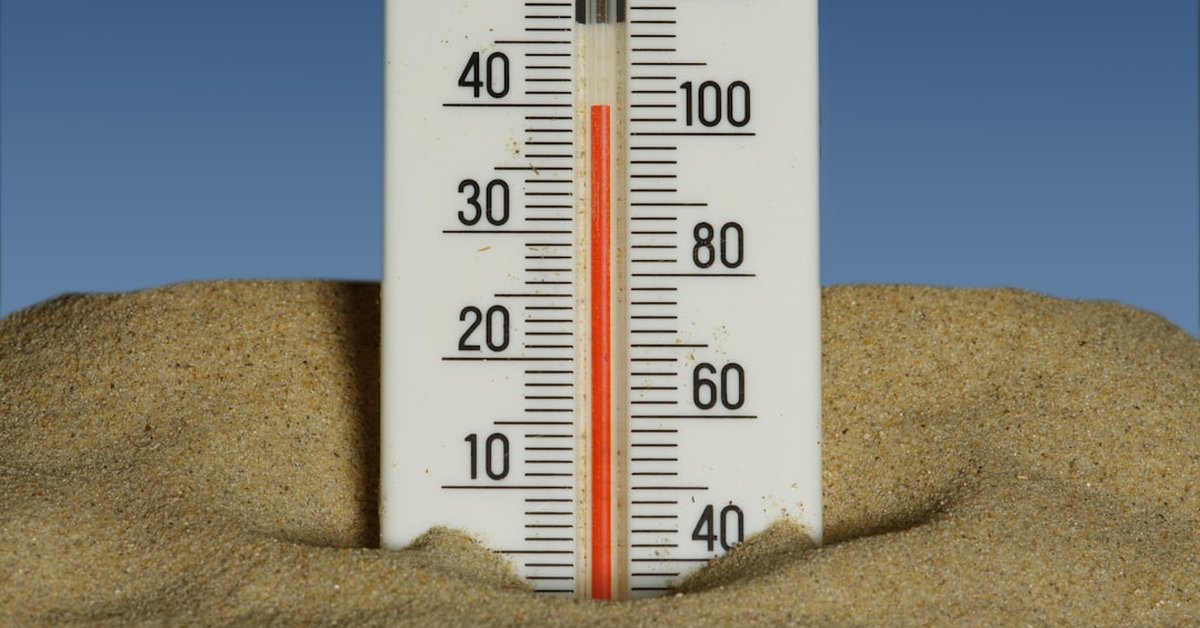








‘It feels like standing in front of a blast furnace, except the air itself is burning your lungs. Your skin prickles, your head throbs, and you feel like you’re being slowly cooked from the inside out.’
That is the visceral reality of 49 degrees Celsius—120 degrees Fahrenheit—a temperature that is increasingly becoming a grim benchmark for extreme heat events around the world. But what does it actually feel like to live through such a day? And is this historically normal for affected areas?
The answer is a resounding, unsettling no.
Consider the heatwave that baked Phoenix, Arizona, in July 2023, where temperatures hit 49°C for three consecutive days. Or the blistering 49.6°C recorded in Lytton, British Columbia, in June 2021—a town that burned to the ground just days later. Or the 49.1°C that struck Delhi, India, in May 2022, sending thousands to overwhelmed hospitals with heatstroke. These are not anomalies; they are the new face of a rapidly warming world.
To understand 49°C, you need to understand the human body’s limits. At this temperature, the body’s cooling mechanism—sweating—becomes almost useless. The air is so hot that it cannot absorb moisture, so sweat simply drips off, providing no relief. The heart races, blood pressure spikes, and within minutes, heat exhaustion can spiral into life-threatening heatstroke. ‘It’s not just uncomfortable,’ says Dr. James Turner, a meteorologist at the National Center for Atmospheric Research. ‘It’s a direct assault on your biology. Your cells start to denature, like an egg frying on a sidewalk.’
The Numbers Don’t Lie: A World Off the Charts
For decades, 49°C was considered almost mythical—a temperature reserved for the hottest deserts on Earth, like Death Valley or the Sahara. But in the last ten years, that threshold has been breached with alarming frequency. In 2023 alone, parts of Iran, Iraq, China, and the United States all recorded temperatures at or above 49°C. The World Meteorological Organization reports that such extreme heat events are now five times more likely than they were in the pre-industrial era.
Take the Pacific Northwest, a region known for its mild, rainy climate. In June 2021, a ‘heat dome’ parked over Oregon and Washington, shattering records. Portland hit 46.7°C; Seattle reached 42.2°C. For context, the average high in Seattle in June is 22°C. The heat killed an estimated 800 people in the region. ‘That event was a statistical outlier, a one-in-a-thousand-year event,’ says Dr. Turner. ‘But with climate change, the odds are shortening. What was once a freak occurrence is becoming a recurring nightmare.’
For people living through 49°C, the experience is surreal. Roads buckle. Train tracks warp. Power grids fail as millions crank up air conditioners. In Phoenix, the city’s burn unit reported an uptick in patients with third-degree burns from falling on hot pavement. ‘It’s like living on a different planet,’ says Maria Hernandez, a Phoenix resident who endured the 2023 heatwave. ‘You don’t go outside. You don’t open windows. You just hide in your air-conditioned box and pray the power doesn’t go out.’
Is This Historically Normal? A Brief History of Heat
The short answer is no. Let’s look at the data. In India, the city of Delhi has recorded temperatures above 49°C only four times in the last 100 years—and three of those occurred after 2016. In Canada, the record for the highest temperature ever measured was set in Lytton at 49.6°C in 2021, surpassing the previous record of 45°C set in 1937. That’s a jump of nearly 5°C in less than a century.
Globally, the average temperature has risen by 1.2°C since the late 1800s, but that average masks extreme spikes in certain regions. The Arctic is warming four times faster than the global average, which disrupts jet streams and creates the ‘heat domes’ that trap hot air over continents. ‘What we’re seeing is not a natural cycle,’ explains Dr. Santos. ‘It’s a direct consequence of burning fossil fuels. The baseline has shifted, and the extremes are now off the charts.’
For historical context, consider that during the Roman Warm Period (250 BC to 400 AD), global temperatures were similar to today’s, but that was a gradual shift over centuries. Today’s warming is happening in decades—too fast for ecosystems and infrastructure to adapt. ‘The pace is the problem,’ says Dr. Turner. ‘Our cities, our agriculture, our bodies—they evolved for a climate that no longer exists.’
What 49°C Means for You: The Human Toll
For readers in the US, UK, and Canada, 49°C might seem like a distant problem, something that happens in deserts or faraway countries. But the reality is that extreme heat is migrating. In July 2022, the UK shattered its all-time high temperature with 40.3°C at Coningsby, Lincolnshire. That’s still short of 49°C, but it was enough to melt runways, warp railway lines, and cause over 3,000 excess deaths. ‘The UK is not built for heat,’ says Dr. Santos. ‘Most homes don’t have air conditioning. The infrastructure is designed for mild summers. A 49°C day in London would be catastrophic.’
The economic toll is staggering. A 2023 study by the Atlantic Council found that extreme heat costs the global economy $16 trillion per year in lost productivity, healthcare costs, and infrastructure damage. For individuals, the cost is personal: higher electricity bills, damaged crops, and the constant anxiety of the next heatwave. ‘I’ve lived in Arizona my whole life,’ says Hernandez. ‘But I’ve never felt fear like I did last summer. You watch the thermometer climb and you just hope it stops. But it doesn’t.’
And then there’s the psychological impact. Heat is linked to increased violence, reduced cognitive function, and higher suicide rates. Emergency rooms see spikes in mental health crises during heatwaves. ‘Heat is a silent killer,’ says Dr. Santos. ‘It doesn’t leave a visible scar, but it damages your body and your mind.’
A Future on Fire: What Comes Next
So, what does 49°C feel like? It feels like the planet screaming. It feels like a warning we are ignoring. It feels like the new normal for a world that no longer recognizes itself.
The question is not whether 49°C is historically normal—it’s not. The question is whether we can adapt fast enough to survive it. Cities like Phoenix are trying: painting roofs white, planting more trees, opening cooling centers. But these are band-aids on a gaping wound. The root cause—greenhouse gas emissions—remains largely unchecked. As Dr. Turner puts it: ‘We are all living in a giant greenhouse. The only question is how hot we’re willing to let it get.’
For now, 49°C remains a rare, terrifying event. But if trends continue, it will become as common as a summer thunderstorm. And when that day comes, we won’t have the luxury of asking what it feels like. We’ll be living it.