


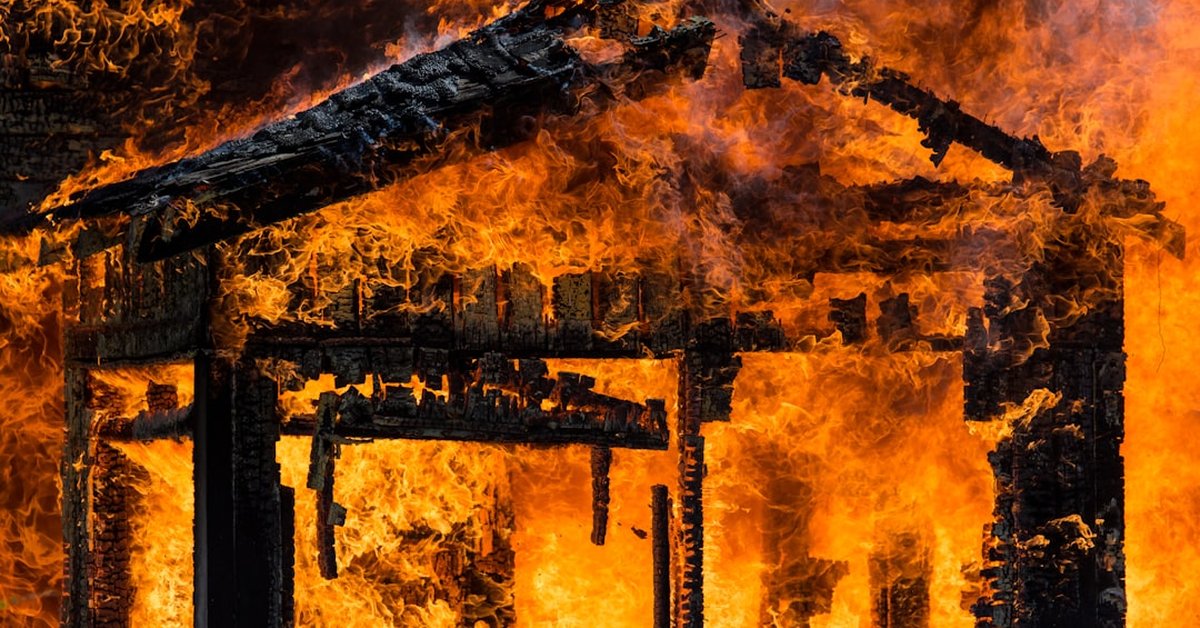
Picture this: a two-story house, fully furnished, sitting inside a cavernous warehouse. Sprinklers are dormant. Embers descend from a giant wind tunnel. Within minutes, smoke billows, flames crawl up the siding, and the attic erupts. The house is gone in under an hour.
This isn’t a tragedy. It’s an experiment. And it’s happening at the Insurance Institute for Business & Home Safety (IBHS) Research Center in rural South Carolina—a place where scientists deliberately set homes on fire to learn how to keep your home from burning down when the next wildfire roars through.
Wildfires are getting worse. That’s not opinion—it’s data. The National Interagency Fire Center reports that the 2020s have already seen the largest average acreage burned per year in U.S. history. NOAA’s climate monitoring confirms that fire seasons are starting earlier, lasting longer, and consuming more land. But here’s the thing: wildfires don’t have to destroy entire communities. The problem isn’t just the flames—it’s the house itself.
Why Your Home’s Weakest Link Is a Straw
So what exactly are they torching? The IBHS lab can simulate wildfire conditions with a 105-foot-long wind tunnel, a massive fan, and a system that showers a test structure with firebrands—those glowing embers that fly ahead of a wildfire. And it’s those embers, not the main fire front, that destroy most homes.
“We’ve seen time and again that a house burns down because a tiny ember lands in a gutter filled with pine needles, or gets sucked into an attic vent,” says Dr. Anne Cope, Chief Engineer at IBHS. “The structure itself becomes the fuel.”
Her team has tested different building materials, vent designs, and landscaping choices. The results are blunt: a wood-shake roof is a matchbook. A metal roof, on the other hand, can shrug off embers. Eaves that are boxed in (so embers can’t enter) dramatically reduce ignition risk. And a 5-foot non-combustible zone around the house—gravel, concrete, bare dirt—can stop a fire in its tracks.
These findings aren’t just academic. In 2018, the Camp Fire in Paradise, California, killed 85 people and destroyed nearly 19,000 structures. A NFPA report later found that many of the homes that survived had exactly these features: non-combustible roofs, enclosed eaves, and defensible space.
From Lab to Living Room: What’s Taking So Long?
You’d think builders would rush to adopt these fire-resistant designs. But the housing market is slow to change. Building codes are often updated only after a disaster, and even then, they face pushback from developers and homeowners who don’t want to pay extra. “The cost of retrofitting an existing home is higher than building it right the first time,” notes Dr. Cope. “But the cost of rebuilding after a fire is astronomical—in lives and dollars.”
Look, we’re not talking about a luxury upgrade. The IBHS Wildfire Prepared Home program estimates that the most critical measures—replacing a wood roof, enclosing vents, removing flammable mulch—can cost between $5,000 and $15,000 for a typical single-family home. That’s roughly the same as a new HVAC system. And in high-risk areas, it can slash the chance of a home igniting by over 90%.
Some regions are getting the message. California’s new building code for the wildland-urban interface (WUI) requires Class A fire-rated roofs, ember-resistant vents, and ignition-resistant siding. But that only applies to new construction. And vast swaths of the U.S. West, along with parts of Canada and the UK, still lack comprehensive WUI codes. In Scotland, for instance, a “Very High” wildfire alert was issued for the Highlands earlier this year, raising questions about whether homes there are built to withstand the threat.
Meanwhile, satellite technology is giving us a new vantage point. RAMMB Slider imagery has captured wildfires in breathtaking detail, revealing how quickly flames can jump from one neighborhood to the next. The data is clear: the fire doesn’t care about your property line. It cares about what’s combustible.
The Bigger Picture: This Isn’t Just About Wildfires
What we’re learning from burning down houses in South Carolina has implications far beyond the western U.S. As climate change shifts weather patterns, wildfire risk is expanding into regions that historically rarely saw flames. The 2021 Marshall Fire in Colorado, the 2023 fires in Nova Scotia, and the 2020 fires in Oregon all hit areas considered low-risk just a decade ago.
“We’re in a new era of fire,” says Dr. John Bailey, a fire scientist at Oregon State University (not affiliated with the lab). “The assumption that ‘it won’t happen here’ is dangerous. But the good news is we know what works. The question is whether we have the political will and the individual responsibility to implement it.”
So what can you do? Start small. Clear your gutters. Move firewood away from the house. Replace wood chips with gravel. Check your roof material. If you’re building a new home, ask your builder about ember-resistant vents. The IBHS website offers a free checklist. And if you live in a condo or apartment, talk to your HOA or landlord about fire-resistant landscaping.
This isn’t about living in fear. It’s about living with fire—because fire isn’t going anywhere. The lab burns houses so that yours doesn’t have to.
Frequently Asked Questions
What is the IBHS wildfire lab?
The Insurance Institute for Business & Home Safety (IBHS) operates a research center in South Carolina that uses a large wind tunnel and ember generator to simulate wildfire conditions on full-scale test homes. The goal is to identify which building materials and designs best resist ignition from embers and flames.
How much does it cost to make my home wildfire-resistant?
Costs vary widely. Simple upgrades like replacing wood mulch with gravel, clearing gutters, and installing metal mesh over vents can be done for a few hundred dollars. More significant changes—like a new metal roof or replacing wood siding—can range from $5,000 to $15,000. Compared to losing a home, it’s a bargain.
Are wildfires getting worse globally?
Yes. According to NOAA and other agencies, the average area burned by wildfires in the U.S. has increased significantly since the 1980s, driven by climate change, drought, and accumulated fuel. Regions like Canada, Australia, and parts of Europe have also seen record-breaking fire seasons in recent years.