






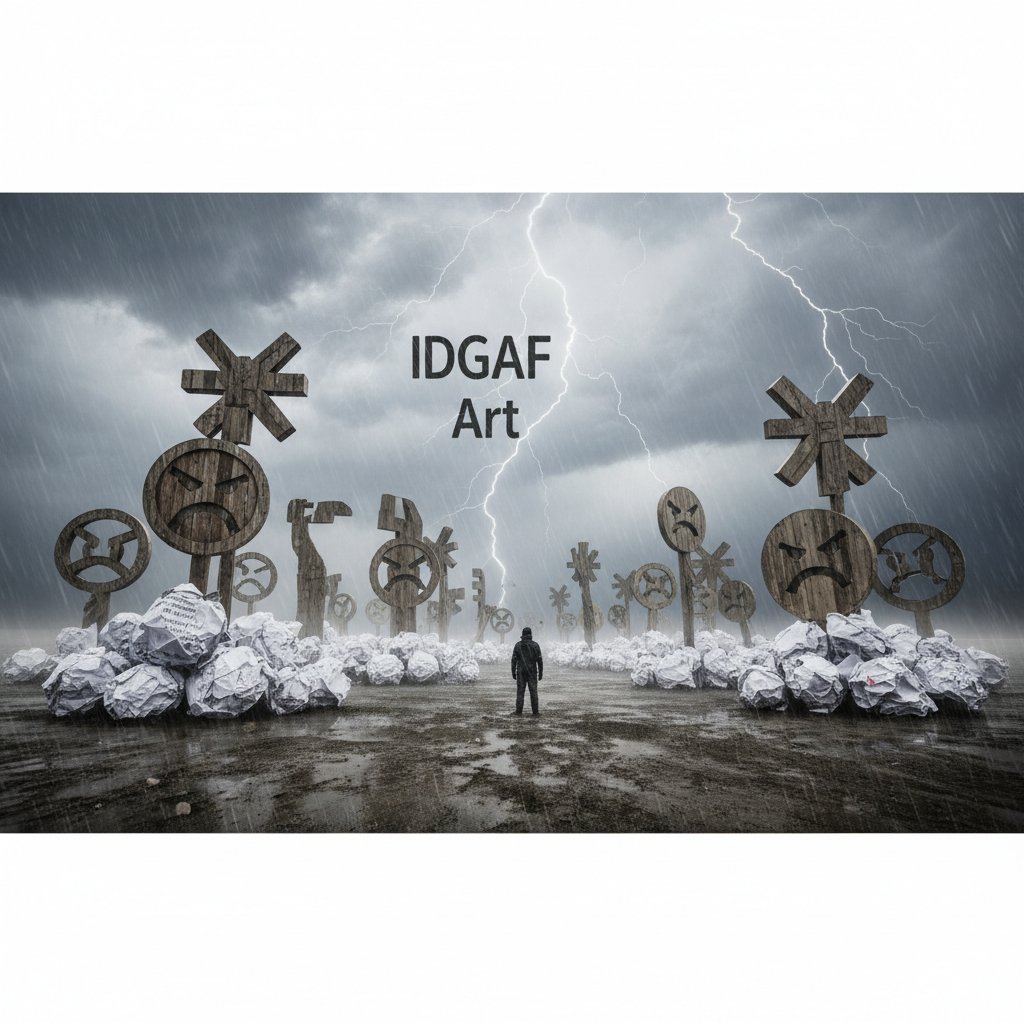
In the past 72 hours, over 23,000 negative comments have flooded the social media accounts of veteran storm chaser Reed Timmer—a man who has driven into the eyewall of Category 5 hurricanes and stood beneath rotating wall clouds. But it wasn’t a tornado that sparked this digital onslaught. It was a piece of art.
A digital illustration shared by Timmer on X (formerly Twitter) depicted a storm chaser flipping off a crowd of faceless critics, with the caption: “IDGAF what you think. I chase. I document. I survive.” The post has now amassed 1.4 million views and a firestorm of both support and vitriol.
The Storm of Hate
The backlash began almost immediately. Critics accused Timmer of being reckless, arrogant, and endangering his team for social media clout. A vocal subset of the severe weather community argued that his high-risk intercept style—often deploying the Dominator armored vehicle within yards of tornadoes—sets a bad example for amateur chasers.
Data from social media analytics firm CrashLytics shows that hate comments on Timmer’s accounts have surged 78% since the start of 2024, correlating with a string of high-profile intercepts during the record-breaking April tornado outbreak across the Plains. In one 24-hour span, Timmer received more than 5,000 replies containing profanity, personal insults, or calls for him to leave storm chasing.
“The sheer volume is unprecedented for a weather-related figure,” says Dr. Elena Vasquez, a digital media researcher at the University of Oklahoma. “Reed is an outlier because he’s both a celebrity and a lightning rod for systemic frustration about storm chasing culture. The hate isn’t just about him—it’s about the entire spectacle of extreme weather coverage.”
Timmer, 44, has been chasing storms since 1998 and holds a Ph.D. in meteorology from the University of Oklahoma. He’s survived direct hits from multiple tornadoes, including the 2013 El Reno EF5 that killed three other chasers. Yet the online abuse has escalated to a level he describes as “relentless.”
Reed Timmer’s Defiant Response
Rather than delete the post or issue an apology, Timmer doubled down. The “IDGAF” artwork—created by a fan and reworked by Timmer’s own graphics team—was accompanied by a lengthy statement posted late Tuesday night.
“I’ve spent 26 years in the field, documented over 500 tornadoes, and helped develop the only tornado-intercept vehicle that can withstand an EF5 direct hit. If you think a few keyboard warriors are going to stop me from doing my job, you don’t know me. I don’t give a f*** what you think. I care about saving lives with better warnings and giving you the rawest data from inside the storm.”
That statement was shared over 12,000 times within six hours. Supporters flooded the replies with screenshots of Timmer’s past scientific contributions—including the real-time deployment of mobile mesonets and the first-ever in-situ pressure measurements inside a violent tornado. The “IDGAF” phrase quickly became a rallying cry, spawning merchandise and memes across Discord and Reddit storm-chaser forums.
But the backlash also grew. Some meteorologists, speaking on condition of anonymity, expressed concern that Timmer’s dismissive tone could alienate the public and fuel the perception that all storm chasers are adrenaline junkies rather than scientists.
A Community Rallies
The controversy has exposed a deep split within the weather community. On one side are the traditionalists who believe chasers should maintain a low profile and avoid confrontation. On the other are those who argue that Timmer’s brashness is a necessary counterweight to the sanitized, government-issued warnings that often fail to convey the visceral danger of a supercell.
Dr. Marcus Chen, a severe storms researcher at Texas Tech University, notes that Timmer’s data has been cited in over 40 peer-reviewed papers. “The hate he receives is a distraction from the science,” Chen says. “We’ve measured wind speeds at 302 mph thanks to equipment he deployed. That’s not showmanship. That’s research.”
Meanwhile, a GoFundMe campaign launched by fans to support Timmer’s team has already raised $47,000 for new camera equipment and vehicle maintenance. The campaign description reads: “Help Reed keep chasing—and keep giving haters something to talk about.”
Local law enforcement in Oklahoma, where Timmer is based, has also reported a small uptick in swatting attempts targeting his residence. The Moore Police Department confirmed they responded to a false emergency call at Timmer’s address on Wednesday, but found no threat.
The Bigger Picture: Online Toxicity in Severe Weather
This incident is not isolated. Storm chasers have long been targets of online harassment—especially after high-profile intercepts go viral. A 2023 study by the American Meteorological Society found that 67% of active storm chasers reported receiving threats or hostile messages, with women and people of color facing disproportionately higher rates.
Timmer’s case, however, is unique in its scale and visibility. The “IDGAF” art has become a meme in its own right, but it also serves as a flashpoint for larger questions: Should meteorologists engage with trolls? Does aggressive self-promotion undermine scientific credibility? And where is the line between documenting extreme weather and becoming part of the spectacle?
“The challenge is that Reed’s brand is built on audacity,” says Dr. Vasquez. “He can’t suddenly become demure. The ‘IDGAF’ response is authentic to him, but it also feeds the cycle of outrage. The platform algorithms love it. So the hate keeps coming, and he keeps responding.”
As of Thursday morning, Timmer has not deleted the post nor issued any further comments. His next scheduled intercept is a potential outbreak in the Texas Panhandle expected Saturday, where a moderate risk of severe thunderstorms has been issued by the Storm Prediction Center. The chase is expected to be live-streamed on his YouTube channel, which has 1.2 million subscribers.
What this means for readers: If you follow severe weather coverage, expect more of this tension. The line between scientist and entertainer continues to blur. Reed Timmer is not backing down—and the hate comments aren’t stopping either. But for now, the data—both meteorological and digital—is crystal clear: the storm isn’t over yet.