






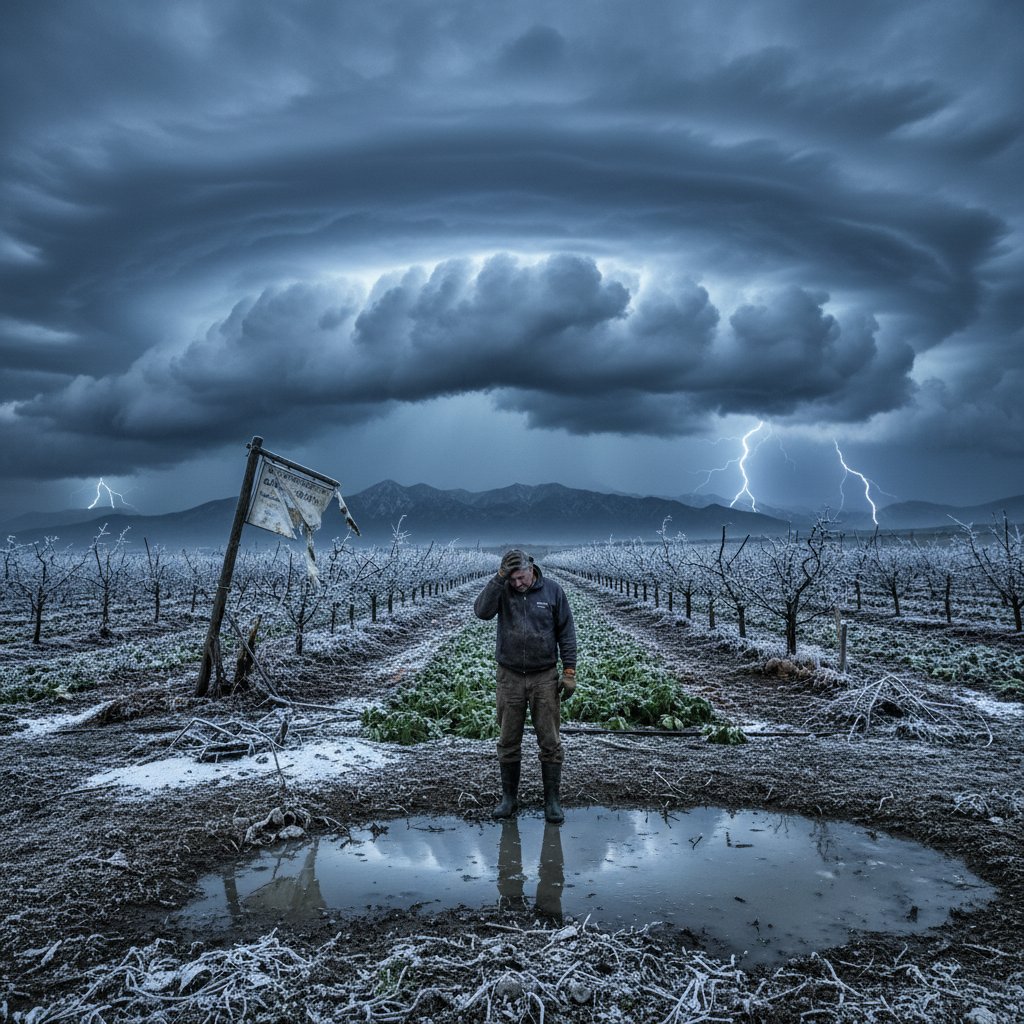
“We’ve never seen a freeze this late in April with such widespread devastation. The numbers are staggering — $300 million in crop losses is a conservative estimate,” said Dr. Emily Hartwell, agricultural economist at Rutgers University.
On April 21, 2025, a brutal hard freeze swept across New Jersey, plunging temperatures to 22°F in some areas and wiping out nearly a third of the state’s fruit and vegetable crops. Governor Phil Murphy declared a state of emergency for all 21 counties, unlocking disaster relief funds and federal aid. The freeze, which followed an unusually warm March, caught growers off guard and left fields of peaches, apples, blueberries, and asparagus in ruins.
According to the New Jersey Department of Agriculture, preliminary damage assessments show $300 million in losses — a figure that could rise as more growers report. The hardest-hit regions include Hunterdon, Gloucester, and Burlington counties, where temperatures dropped below 26°F for six consecutive hours. “This is a generational event,” said state climatologist David Robinson. “We haven’t seen a late-season freeze this severe since 1966.”
How the Freeze Unfolded: Data and Timing
The freeze originated from a polar vortex dip that pushed Arctic air into the Mid-Atlantic. At 3:00 AM on April 21, weather stations in Sussex County recorded a low of 22°F. In Hammonton, the blueberry capital of the Northeast, thermometers hit 24°F. The National Weather Service had issued a freeze warning 48 hours earlier, but many farmers hoped protective measures — row covers, irrigation — would suffice. They didn’t.
Dr. Hartwell explained: “When temperatures drop below 28°F for more than four hours during bloom stage, cell damage is irreversible. For stone fruits like peaches and cherries, even a brief dip to 26°F can kill the buds.” Data from the Rutgers New Jersey Agricultural Experiment Station shows that 80% of peach blossoms were destroyed in central counties. Apple trees fared slightly better, with 40% loss, but late-blooming varieties suffered catastrophic damage.
Blueberry bushes, a $90 million industry for the state, lost an estimated 35% of this year’s crop. “We’re looking at a 50% reduction in yield for early-season varieties,” said Tom Kovach, a fourth-generation grower in Atlantic County. “I’ve been farming for 40 years, and I’ve never seen anything like this.”
State of Emergency: What It Means for Growers
Governor Murphy’s state of emergency declaration activates the New Jersey Office of Emergency Management and allows the state to request federal assistance through the USDA’s Disaster Assistance Program. Eligible farmers can apply for low-interest loans from the Farm Service Agency and may qualify for crop insurance payouts. However, only about 60% of New Jersey’s fruit and vegetable acreage is insured, leaving many small farms exposed.
“This is a lifeline, but it’s not a cure-all,” warned Assemblyman John DiMaio, who represents rural Warren County. “We need to see rapid disbursement of funds before farmers go under.” The state has also set up a hotline for growers to report losses and access mental health resources — a sign of the profound stress this event has caused.
New Jersey’s agricultural sector contributes over $1.5 billion annually to the state economy. The freeze’s $300 million hit represents 20% of that total. For context, Hurricane Sandy caused $300 million in agricultural losses in 2012, but that damage was spread across crops, infrastructure, and equipment. This freeze is almost entirely crop-specific.
Historical Context: Late Freezes and Climate Patterns
Late-season freezes are not unprecedented in New Jersey, but their timing and intensity are becoming more erratic. Data from the National Centers for Environmental Information shows that the last freeze after April 15 occurred in 2016, when temperatures dropped to 27°F in parts of the state. The 1966 freeze, often cited as the benchmark, brought lows of 20°F on April 22 and caused $150 million in losses (adjusted for inflation, about $1.2 billion today).
“Climate change is making these events more volatile,” said Dr. Robinson. “Warmer winters cause plants to break dormancy earlier, and then a late cold snap hits them when they’re most vulnerable. We’re seeing a pattern: early bloom, then a freeze. It’s a double whammy.”
The 2025 freeze was particularly damaging because it followed a March that was 4°F above average. Peach trees bloomed in late March instead of mid-April. When the freeze hit, the buds were fully open — the stage most susceptible to frost. “If we had a normal spring, the buds would have been tighter and more resilient,” explained Dr. Hartwell. “This timing was catastrophic.”
Impact on Consumers and the Supply Chain
Consumers will feel the effects at the grocery store starting this summer. New Jersey is the third-largest producer of blueberries in the U.S., and the state’s peaches are a summer staple for East Coast markets. With supply down, prices are expected to rise 15-25% for local fruit. “You’ll see fewer Jersey peaches at farmers’ markets, and they’ll cost more,” said Kovach. “We’re already getting calls from wholesalers asking about availability. I have to tell them we’re cutting allocations by half.”
The loss also ripples through related industries: farm workers, trucking, processing plants, and farm stands. In Gloucester County, where asparagus is a major crop, the freeze killed 50% of the spears. “We’ll have a very short season,” said Maria Lopez, who runs a 200-acre organic farm. “I’ve had to lay off six seasonal workers. That’s heartbreaking.”
Some growers are exploring new strategies: high-tunnel greenhouses, wind machines, and even drone-based frost monitoring. “We need to invest in climate-resilient infrastructure,” said Dr. Hartwell. “But for small farms, that’s a huge upfront cost. The state and federal governments need to provide grants, not just loans.”
Looking Ahead: Recovery and Resilience
As New Jersey recovers, the focus shifts to the fall harvest and next year’s crop. Many orchards will see reduced yields for two to three years because the freeze damaged not only this year’s fruit but also the wood and branches that support future growth. “For peaches, it’s a double hit,” said Dr. Hartwell. “You lose this year’s crop, and the tree’s energy is depleted. Next year’s buds may be weaker.”
The state is already planning a task force to study frost mitigation and crop insurance reform. Governor Murphy has pledged $10 million in emergency grants for affected farms, and U.S. Senator Cory Booker has called for an expedited USDA disaster declaration. “We cannot let this event define New Jersey agriculture,” said Murphy at a press conference on April 23. “We will rebuild, but we need to adapt.”
The April 21 hard freeze will be studied for years as a case study in climate vulnerability. For now, farmers are tallying losses, filing claims, and hoping for a warm May. The road to recovery will be long — and expensive.