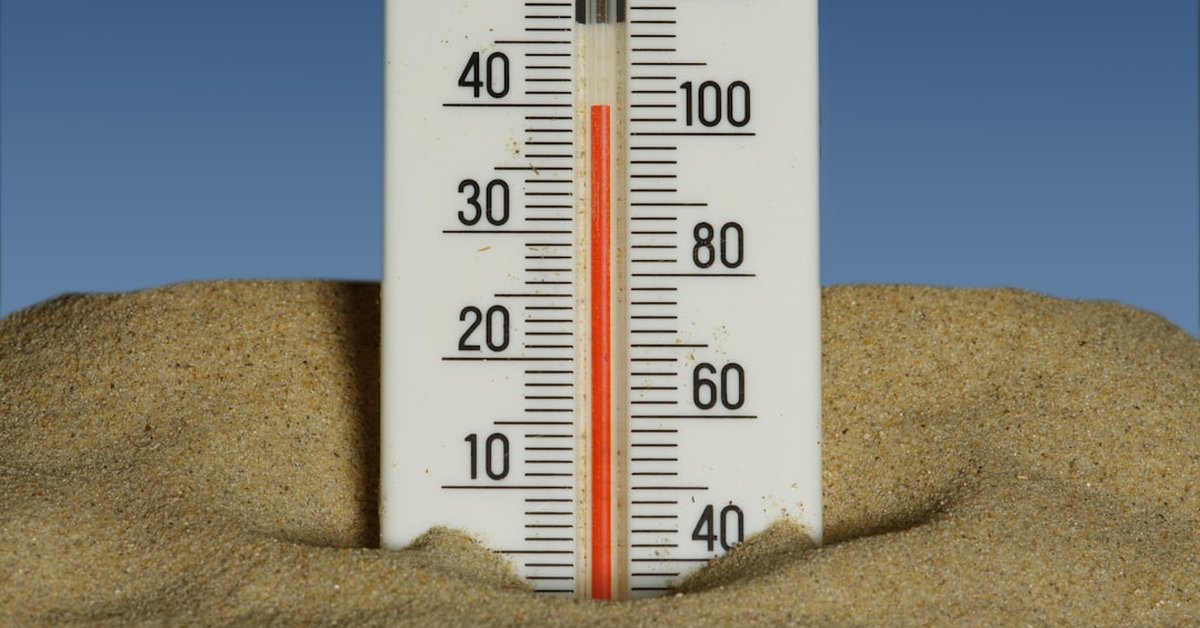







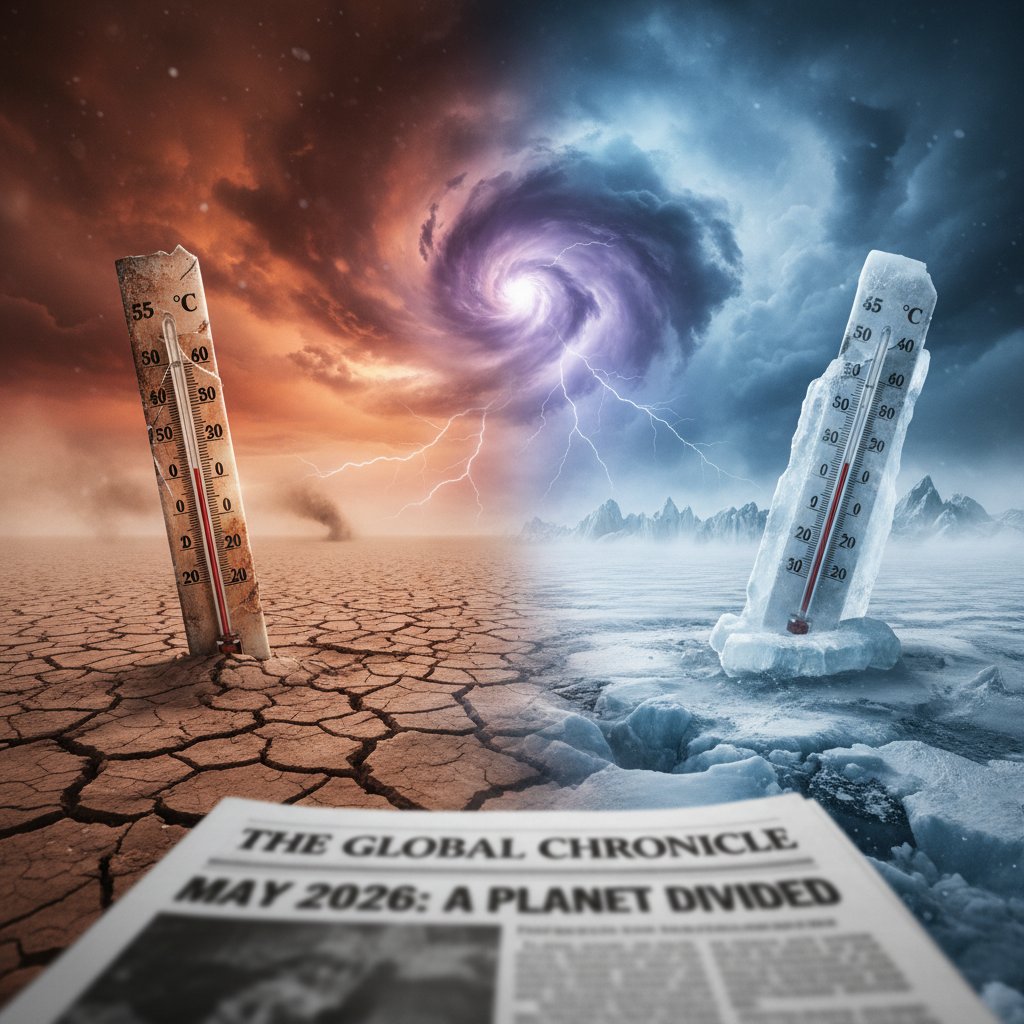
“We are witnessing a staggering acceleration of climate extremes. May 2026 will be remembered as the month the planet’s temperature dial shattered,” says Dr. Elena Vasquez, lead climatologist at the Global Climate Monitoring Institute.
May 2026 has closed as one of the most extraordinary months in modern meteorological history—a period defined not by a single heatwave or cold snap, but by simultaneous, record-shattering extremes across continents. From the scorching streets of Delhi to the frozen fields of Patagonia, the planet’s climate system seemed to lurch into a new, unsettling rhythm.
The numbers are stark: global average surface temperature for May 2026 was 1.45°C above the pre-industrial baseline, tying with May 2024 as the warmest May on record, according to preliminary data from the World Meteorological Organization. But the devil—and the drama—lies in the regional anomalies.
A Month of Broken Records
In India, a brutal heatwave gripped the northern and central states for nearly three weeks. On May 19, the city of Churu in Rajasthan hit 52.3°C (126.1°F), a new national record. “It felt like walking into an oven. The air itself seemed to burn,” says local shopkeeper Rajesh Sharma, 54, who lost two elderly relatives to heatstroke. The Indian Meteorological Department issued red alerts for over a dozen states, and hospitals reported a 300% spike in heat-related admissions.
Meanwhile, across the Pacific, a persistent heat dome settled over the Pacific Northwest. Seattle recorded 39.4°C (103°F) on May 22—its hottest May day ever. Vancouver saw 36.7°C. The unprecedented early heat triggered rapid snowmelt in the Cascades, raising flood risks downstream.
Europe did not escape. In Spain, Cordoba hit 44.1°C on May 24, smashing the previous May record. France saw its earliest 40°C day on record in Toulouse. Dr. Jean-Pierre Renard, a heatwave researcher at Météo-France, notes: “We used to expect such temperatures in July. Now May is acting like high summer. Our infrastructure—schools, hospitals, transport—is not built for this.”
The Human Toll of Extreme Heat
The health impacts have been devastating. Early estimates from the World Health Organization suggest May 2026 contributed to at least 8,000 excess deaths globally, with India, Pakistan, and Mexico bearing the heaviest burdens. “Heat is a silent killer,” says Dr. Amara Osei, an urban health specialist at the University of Accra. “Unlike a storm, there is no dramatic debris. But the morgues fill just the same.”
In Delhi, where temperatures exceeded 48°C for 11 consecutive days, the government opened cooling centers and distributed free water. Still, reports surfaced of pavement burn victims and railway tracks bending. The city’s power grid buckled under record demand, leading to rolling blackouts.
However, the month’s extremes were not all hot. A remarkable cold spell—driven by a displaced polar vortex—plunged much of southern South America into unseasonable deep freeze. In Buenos Aires, May 14 dawned at -2.5°C—the coldest May morning since 1905. Tens of thousands of homes lacked adequate heating, and at least 15 deaths were attributed to hypothermia.
Not Just Heat: Polar Opposite Extremes
The contrast between hemispheres was stark. While the Northern Hemisphere sweltered, parts of the Southern Hemisphere froze. In Chile, a rare May snowstorm blanketed Santiago on May 8, disrupting flights and causing widespread power outages. “We usually think of May as autumn, not winter. This was a winter storm in autumn,” says Dr. Catalina Muñoz, a climatologist at the University of Chile. “The variability is increasing. We’re seeing the fingerprints of a destabilized climate system.”
In Australia, a late-season heatwave swept across Queensland in the final week of May, with Rockhampton reaching 38.9°C—nearly 10°C above average. The combined effect of these opposing anomalies was a global average temperature that stayed stubbornly high, even as regions experienced extremes at opposite ends of the spectrum.
What caused such a month? Meteorologists point to a combination of persistent high-pressure systems, an unusually active Madden-Julian Oscillation, and the lingering influence of El Niño conditions that finally faded in early May. But behind the immediate drivers lies the long-term trend: human-caused global warming loading the dice for extreme events.
What This Means for the Future
May 2026 serves as a stark preview of what may become increasingly common. “This is not a fluke month. It’s a signpost,” warns Dr. Vasquez. “As the climate continues to warm, we can expect more May weeks that feel like July, more simultaneous heatwaves across continents, and more cold extremes piercing through the warmth.”
For policymakers, the message is urgent. Cities from London to Tokyo have begun reviewing heat action plans, but many are still far behind the curve. “We need to rethink building codes, urban green space, and early warning systems,” says Dr. Osei. “And we need to do it now, because next year could be worse.”
The extremes of May 2026 will be analyzed for months, but one thing is already clear: the Earth’s temperature thermostat is malfunctioning, and the adjustments are coming faster than many had prepared for.