






My grandmother, born in 1930s rural France, remembers summers that were long — not scorching, just long. She’d nap under a chestnut tree at noon, walk barefoot through dew-wet grass at dusk, and sleep with a wool blanket every night. That summer is gone. And for today’s European children, it’s not just a memory they don’t have — it’s a climate baseline they’ll never know.
Here’s what that shift actually means: a child born in Madrid or Berlin or Lyon today will experience, on average, four to seven times more heat-wave days over their lifetime than someone born in 1960. That’s not a forecast from a think tank — that’s the arithmetic of a planet that has already warmed 1.3°C since pre-industrial times, with Europe warming faster than any other continent. The season itself has become a different animal.
And the consequences aren’t just about hotter afternoons. They ripple through health, housing, education, and even the way families plan their summers. Let’s walk through what that actually looks like on the ground.
The Season That Stopped Being a Vacation
For generations, European summer was synonymous with escape. Schools closed for eight weeks. Offices emptied in August. Families decamped to the coast, the mountains, the countryside. That rhythm was built on a climate that no longer exists.
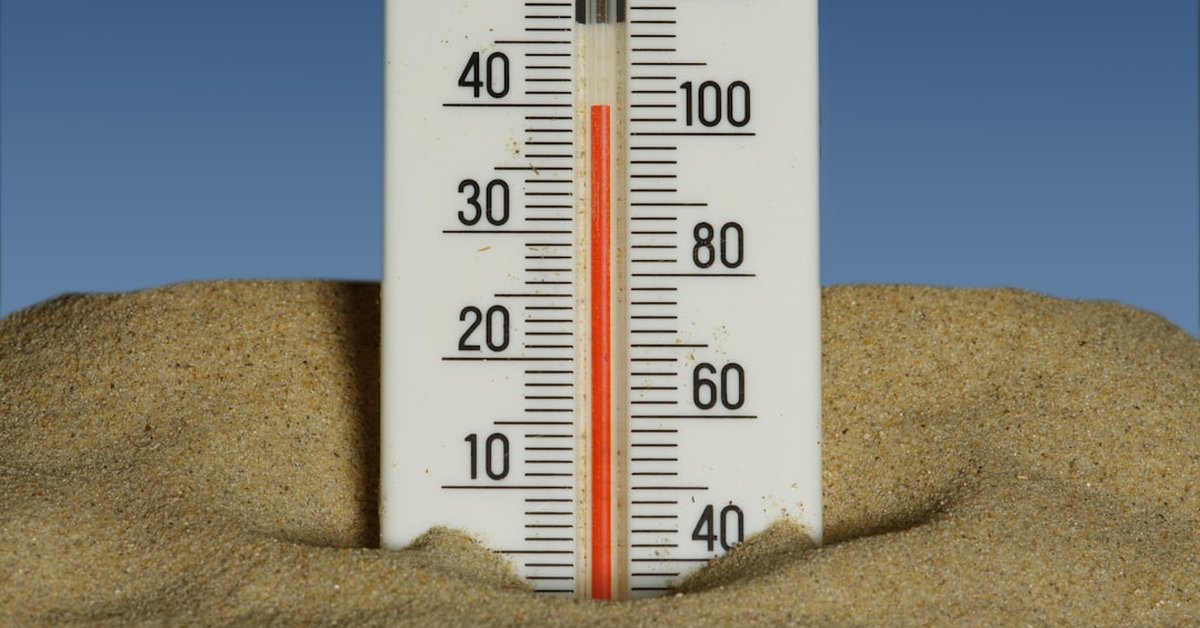
Today, heat waves arrive earlier and linger longer. In July 2023, Sicily hit 48.8°C — a European record that lasted less than two years before being challenged. In Paris, temperatures above 40°C, once a once-in-a-century event, have now occurred three times since 2019. The result? Summer is morphing from a season of leisure into a season of management.
Schools in Greece and Spain are experimenting with midday closures. Outdoor construction work in southern Italy now stops by 11 a.m. during heat alerts. Even the cherished siesta — already fading — is being rethought: in Seville, the city government launched a pilot program to name and categorize heat waves like hurricanes, triggering early closures and cooling-center openings.
“We’re not adapting fast enough,” said a 2024 report from the European Environment Agency, which noted that heat-related mortality in Europe has risen 30% in the past two decades. The agency’s data shows that 61,000 people died from heat stress across Europe in the summer of 2022 alone — most of them elderly, most of them in cities.
And here’s the part that doesn’t make headlines: the psychological toll. A study published in The Lancet Planetary Health last year found that European adolescents are reporting higher rates of climate anxiety than their parents did at the same age. The reason isn’t abstract. It’s concrete: they’ve never known a summer without a heat-wave warning.
What a Child’s Summer Actually Looks Like Now
Let’s compare two typical August days — one in 1985, one in 2024 — for a 10-year-old in Lyon, France.
In 1985: Wake up to open windows and a light breeze. Ride a bike to a friend’s house by 10 a.m. Play soccer in a park until noon. Lunch outside under a tree. Afternoon swim in a public pool (unheated, because the air was already warm enough). Evening: dinner in the courtyard, then stay outside until 10 p.m., when the air finally cools.
In 2024: Wake up to shuttered windows and a whirring fan. Indoor play until 11 a.m., because the UV index is already “extreme.” A parent checks the heat alert app before deciding whether outdoor activity is safe. The park is still open, but the synthetic turf on the soccer field is 60°C — too hot to touch. The public pool is open, but the concrete deck burns bare feet. By 5 p.m., the air temperature is still 38°C. Evening: indoors again, because the night temperature hasn’t dropped below 25°C since early July.
That’s not a vacation. That’s a siege. And it’s not just about comfort — it’s about development. Children’s bodies are less efficient at thermoregulation; they heat up faster and cool down slower. A 2023 review in Nature Climate Change found that extreme heat reduces cognitive performance in school-age children by up to 14% on hot days — a deficit that compounds across a summer.
Meanwhile, the infrastructure built for a cooler era is cracking. In London, the Tube — a Victorian-era marvel — becomes effectively unusable on days above 35°C, with platform temperatures hitting 40°C. In Berlin, tram tracks buckle under heat stress. In Rome, the cobblestones absorb heat all day and radiate it back all night, turning the historic center into a heat island that never cools.
And then there’s the quiet crisis of rural Europe. As we covered in our report on European Wildfires: The Empty Countryside Is Fueling the Flames, the exodus of young people from villages means fewer hands to maintain firebreaks, clear underbrush, and keep an eye on the land. When a heat wave hits, the countryside burns — and the children who might have inherited that land are living in climate-controlled apartments in cities, disconnected from the landscape their grandparents tended.
The New Inequalities of Summer
Heat doesn’t discriminate by income — but the consequences of heat absolutely do. This is where the generational divide becomes a class divide.
A child in a wealthy Parisian family spends August in a rented house in Brittany, where temperatures rarely crack 30°C. They swim in the Atlantic, sleep under a duvet, and return to school in September with a normal summer’s worth of outdoor play. Meanwhile, a child in a working-class neighborhood in Seine-Saint-Denis — a banlieue with low tree cover, dark asphalt, and cramped apartments — spends August in a 35°C flat, with a single fan, because the family can’t afford air conditioning or an escape.
That disparity is measurable. A 2024 analysis by the French national statistics agency found that heat-related emergency room visits were 40% higher in the poorest 10% of neighborhoods compared to the richest 10% during the July 2023 heat wave. The children in those neighborhoods also lost more school days — because their schools were too hot to function.
It’s not just France. In the UK, a 2023 report from the Climate Change Committee found that low-income households in London are three times more likely to live in homes that overheat than high-income ones. In Spain, the “heat poverty” rate — defined as households unable to keep indoor temperatures below 26°C — has doubled in a decade.
What does that mean for a generation growing up now? It means that your postcode determines whether summer is a season of growth or a season of stress. That’s not an exaggeration — it’s a pattern visible in real estate listings, school attendance data, and public health records across the continent.
What the Smart Money — and the Smart Policy — Is Watching
Adaptation is happening, but it’s uneven, and it’s slow. Some cities are racing ahead. Barcelona has mandated that all new buildings include green roofs or solar shading. Vienna has turned former industrial sites into “cool corridors” — tree-lined paths that funnel fresh air from the countryside into the city center. Milan has planted 3 million trees since 2018.
But those are exceptions. Most European cities were built for a climate that no longer exists. The average age of housing stock in the EU is 40 years; in the UK, it’s 60. Retrofitting millions of buildings for passive cooling — insulation, reflective roofs, shading — would cost hundreds of billions of euros. And the political will? It’s there in fits and starts, but it’s not uniform.
Meanwhile, the energy system is taking a beating. Heat waves drive up electricity demand for air conditioning — which itself creates more heat, and more emissions if the grid runs on fossil fuels. In southern Europe, the summer peak now rivals the winter peak. In Greece, the grid operator has warned that without massive investment, rolling blackouts during heat waves are a real possibility within five years.
And here’s a second-order effect most people miss: food prices. Extreme heat in Spain and Italy — the continent’s fruit and vegetable basket — has hammered olive oil production (down 40% in 2023), shrunk tomato yields, and forced farmers to irrigate crops that never needed it before. Those costs show up at the grocery store, and they hit low-income families hardest. For a deeper look at how environmental stress is reshaping agriculture, see our piece on India’s Strawberry Revolution: Can It Break Free from US and EU Seeds? — a parallel story of crops adapting to a world that’s no longer predictable.
So where does this leave the European child born in 2025? They will inherit a summer that’s hotter, more expensive, more dangerous, and more unequal than the one their grandparents knew. They will also inherit a generation of activists, engineers, and policymakers who are — slowly, imperfectly — trying to build a different future. Whether they succeed depends on whether we treat summer not as a season to endure, but as a system to redesign.
Because the chestnut tree my grandmother napped under? It’s still there. But the shade it casts is a little thinner now. And the children who might sit beneath it deserve a summer that’s still worth remembering.
Frequently Asked Questions
How much hotter have European summers gotten compared to my childhood?
Since 1960, average summer temperatures in Europe have risen by about 2°C — that’s roughly double the global average. The number of heat-wave days has tripled in southern Europe, and the season itself has lengthened by about two weeks. A child born today will experience roughly four times as many heat-wave days as someone born in 1970.
Is air conditioning the answer to extreme heat?
Not in the long term. AC provides immediate relief, but it creates a feedback loop: it consumes massive amounts of electricity (often from fossil fuels), it pumps waste heat into the air outside, and it doesn’t address the root cause — poor building design and lack of green space. Passive cooling — insulation, reflective roofs, window shading, tree planting — is more sustainable and more equitable, because it doesn’t require every household to buy an expensive appliance.
What can I do to protect my family during a heat wave without AC?
Focus on three things: shade, airflow, and hydration. Close curtains or blinds during the day, especially on south- and west-facing windows. Open windows at night to let cooler air in, then close them in the morning. Use fans strategically — place a bowl of ice in front of a fan to create a makeshift cooler. Stay hydrated, avoid alcohol and caffeine, and check on elderly neighbors. If your home is dangerously hot, locate public cooling centers (libraries, shopping malls, community centers) in advance.