







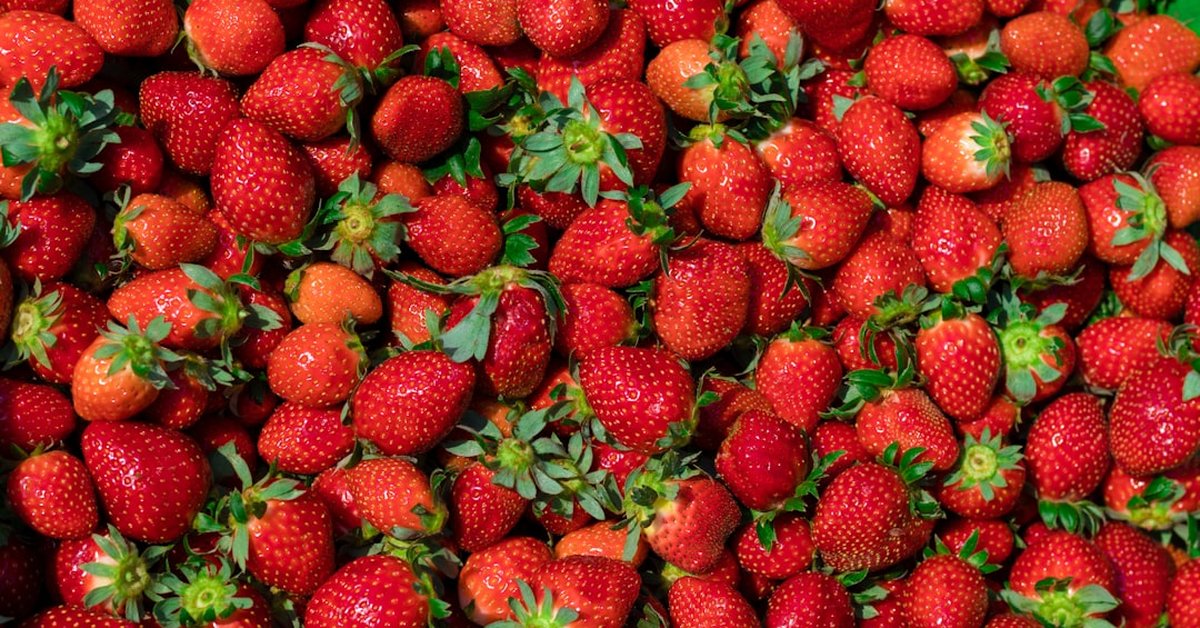
When you bite into a strawberry in Mumbai or Delhi this winter, you’re tasting a piece of California or Spain. That’s not a metaphor — it’s the botanical reality. India’s strawberry farmers, from the hills of Mahabaleshwar to the outskirts of Bengaluru, rely almost entirely on imported varieties bred for temperate climates. But that dependence is starting to crack. And the implications stretch far beyond the fruit basket.
Here’s the thing: India grows a lot of strawberries — roughly 25,000 metric tons annually, concentrated in Maharashtra, Karnataka, and the Himalayan foothills. But nearly every plant in the ground traces its lineage to foreign breeding programs. The varieties — like ‘Winter Dawn’, ‘Nabila’, and ‘Camarosa’ — were developed for European and American growing conditions. They’re finicky in tropical heat, susceptible to local pests, and require intensive chemical management. Farmers pay premium prices for imported runners (the starter plants) every season, with no guarantee of consistent supply.
But that’s changing. India’s agricultural research system, led by the Indian Council of Agricultural Research (ICAR), has quietly begun developing indigenous varieties. The first homegrown strawberry cultivar, ‘Pusa Aroma’, was released in 2022. More are in the pipeline. The goal isn’t just to reduce import bills — it’s to create strawberries that actually thrive in Indian conditions.
What this means for you: If you’re a consumer in North America or Europe, this doesn’t affect your supermarket berries directly. But it signals a broader shift in global agriculture. Developing nations are pushing back against seed dependency. And strawberries, for all their delicate appearance, are at the center of a quiet revolution.
The Import Trap: Why Indian Farmers Can’t Grow Their Own
The strawberry business in India is a strange beast. The fruit is a winter crop in most of the country, grown from October to March. Farmers buy new runners every year from commercial nurseries that import mother plants from the US (California primarily), the Netherlands, and Spain. These varieties are bred for high yield, firmness for shipping, and disease resistance — but they were designed for Mediterranean or coastal California climates.
In India’s varied conditions — from the humid Western Ghats to the dry Deccan plateau — those traits don’t always translate. “The imported varieties are not adapted to our photoperiod and temperature patterns,” says a 2023 ICAR research paper on strawberry breeding. Translation: the plants get confused. They flower at the wrong time. They produce smaller fruit. They die young.
Farmers compensate with heavy fertilizer and pesticide use — a practice that’s both expensive and environmentally damaging. The Indian Council of Medical Research has flagged pesticide residues in imported strawberry varieties as a concern. But farmers have no choice: there’s no domestic alternative at scale.
Compare this to the situation in the US, where the USDA has spent decades breeding region-specific strawberry varieties for different states. California alone has dozens of proprietary cultivars developed by the University of California system. India wants that capability. And it’s starting to build it — from scratch.
Pusa Aroma and the New Wave of Indian Strawberries
The first breakthrough came in 2022, when ICAR’s Division of Vegetable Science released ‘Pusa Aroma’. It’s not a flashy name, but it’s a milestone. This is the first strawberry cultivar developed entirely in India, using indigenous germplasm collected from the wild and crossed with selected foreign varieties.
Pusa Aroma is bred specifically for the North Indian plains — the vast, hot, humid belt that stretches from Punjab to West Bengal. It flowers earlier, tolerates higher temperatures during fruit set, and produces berries with a distinct aroma (hence the name). Yield is comparable to imported varieties, but with 30% less water requirement and reduced pesticide use.
More varieties are coming. ICAR’s research stations in Bangalore, Solan, and Shillong are testing crosses that could extend the growing season or allow strawberries to be grown in tropical lowlands — something currently impossible with imported strains.
“This is not about replacing imports overnight,” says a 2024 ICAR status report on horticulture crops. “It’s about creating options. If a farmer in Tamil Nadu can grow a strawberry that doesn’t need chilling hours, that changes the economics of the entire region.”
The parallel is striking: just as European wildfires are reshaping how we think about rural land management, India’s strawberry breeding is reshaping how we think about crop adaptation. In both cases, the old assumptions — that imported solutions work everywhere — are crumbling.
The Economics: Who Wins and Who Loses
If India succeeds in developing competitive indigenous varieties, the biggest losers are the multinational seed and nursery companies that currently supply the Indian market. Companies like Lassen Canyon Nursery (US) and Planasa (Spain) have built lucrative export businesses selling runners to India. A single runner can cost a farmer 5-10 rupees ($0.06-$0.12) — cheap by Western standards, but a significant input cost when multiplied across hectares.
India imports an estimated 50-100 million strawberry runners annually. That’s a market worth roughly $5-10 million. Not huge in global terms, but it’s a recurring revenue stream for foreign suppliers. Indigenous varieties would cut that to zero.
The winners? Indian farmers, obviously. Cheaper plants, lower input costs, better adaptation. And Indian consumers, who might eventually see year-round domestic strawberries instead of the current seasonal window. There’s also a geopolitical angle: reducing dependence on foreign agricultural inputs aligns with India’s broader push for self-reliance in food production — a priority since the pandemic disrupted global supply chains.
But there are risks. Developing new varieties takes years — typically 8-12 from initial cross to commercial release. And building a domestic nursery infrastructure to produce millions of runners is a massive logistical challenge. India’s current nursery system is fragmented and unregulated; quality control is uneven. Without reliable, disease-free planting material, even the best new varieties will fail in the field.
What’s Next: The Long Road to Strawberry Independence
ICAR is pushing forward. New breeding lines are being tested at 12 research centers across India, from the temperate hills of Himachal Pradesh to the tropical plains of Kerala. The goal is to have at least three more commercial varieties ready by 2027. One is being developed specifically for the southern plateau, where heat and humidity are the biggest challenges.
There’s also work on organic-friendly traits — disease resistance that reduces the need for fungicides, and natural pest tolerance. India’s organic strawberry market is tiny but growing, driven by export demand to Europe and the Middle East. If indigenous varieties can meet organic certification standards, it opens a premium market that imported varieties currently dominate.
Look, this isn’t going to happen overnight. The US and EU have a century-long head start in strawberry breeding. India is playing catch-up. But the trajectory is clear: the days when an Indian farmer had no choice but to buy foreign plants are numbered.
And that matters beyond strawberries. It’s a case study in how agricultural sovereignty is built — not through tariffs or subsidies, but through the slow, unglamorous work of plant breeding. The same logic applies to other crops: potatoes, apples, grapes. If India can crack the strawberry code, it can do it for almost anything.
The next time you see a punnet of strawberries labeled “Product of India” in a London or Toronto supermarket, remember: it might not be a California berry anymore. It might be something entirely new. And that’s a story worth watching.
Frequently Asked Questions
Will Indian strawberries replace imported ones in global markets?
Not anytime soon. Domestic varieties are being developed for Indian growing conditions first. Export-quality berries with long shelf life are a secondary goal. But if India achieves consistent quality, it could become a competitor in winter strawberry markets currently dominated by Egypt, Mexico, and Morocco.
Are imported strawberry varieties safe to eat in India?
Yes, they are approved for cultivation and consumption by Indian food safety authorities. However, pesticide residue levels have been flagged by some studies. Washing thoroughly is recommended. Indigenous varieties aim to reduce chemical inputs, which could improve safety profiles over time.
How long until Indian farmers can switch entirely to domestic varieties?
Realistic timeline: 5-7 years for significant adoption, assuming new varieties perform well in field trials and a reliable nursery system is built. Complete replacement is unlikely — imported varieties will still be used for specific niches (e.g., high-altitude regions or specialty export markets). But the dominance of foreign runners is expected to decline steadily.