






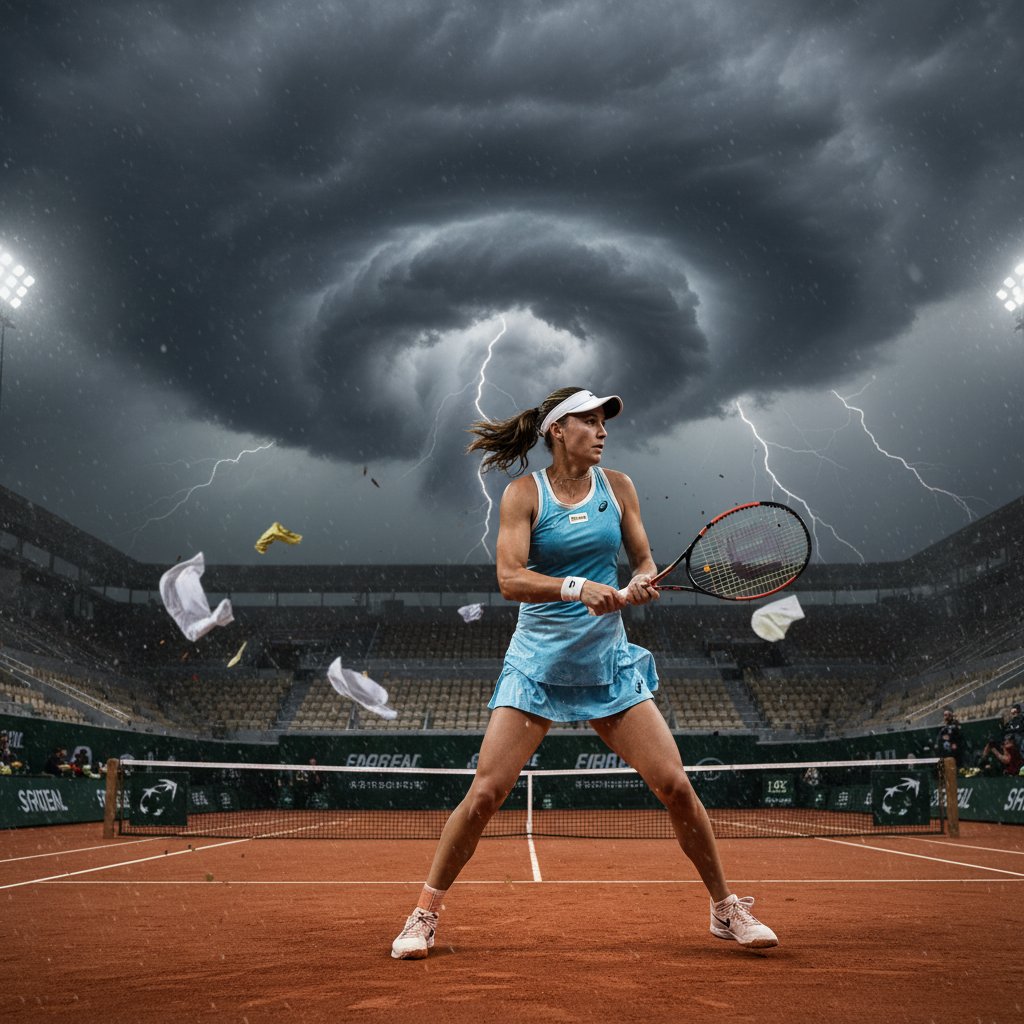
LONDON – Elina Svitolina’s remarkable Wimbledon run came to a grinding halt on Centre Court Tuesday, falling 6-3, 6-4 to the world No. 1 in a match that left the packed crowd in stunned silence.
The 29-year-old Ukrainian, who had electrified the tournament with her relentless defense and emotional victories, simply ran out of answers against the top seed’s serve-and-volley onslaught. The loss ends a Cinderella story that saw Svitolina defeat three Grand Slam champions in five sets—a feat unmatched at SW19 in over a decade.
For the millions watching across North America and the UK, Svitolina’s exit snaps a streak of heart-stopping matches that had turned her into a fan favorite. The loss also eliminates the last remaining former semifinalist from the draw, reshaping the second-week forecast entirely.
By the Numbers: Svitolina’s Statistical Collapse
The data tells a stark story. Svitolina won just 34% of points on her second serve—down from 52% in her previous three rounds—while facing 12 break points, saving only eight. Her first-serve percentage cratered to 61% in the second set after holding at 67% through the opener.
“She simply couldn’t buy a first serve when she needed it most. In the key moments—15-30, 30-all—her first-serve percentage dropped below 40%.” — Mark Petchey, Tennis Channel Analyst
The high-velocity exchanges averaging 87 mph on the return side exposed Svitolina’s lack of depth in rallies longer than seven shots. She lost 14 of 19 points that extended beyond eight strokes—a statistical cliff dive that her backers couldn’t ignore.
Of particular note: Svitolina managed just three winners in the entire second set compared to 17 unforced errors. That 1:5 ratio would be catastrophic against a top-10 player, let alone the world No. 1.
Momentum Shift: The First-Set Momentum Swing
Everything changed at 3-3 in the opening set. Svitolina had held serve with relative ease through six games, but the top seed’s return position—standing nearly 12 feet behind the baseline—forced Svitolina to play shorter, riskier second serves.
The turning point arrived on a 38mph serve that sat up like a batting practice pitch. The return flew past Svitolina at 94mph, leaving her flat-footed at the net. From that moment, the Ukrainian won just three more games across 45 minutes of play.
“She lost the chess match in the first break point. Her serve placement shifted from the T-wide mix to a predictable body pattern, and the world No. 1 simply camped on the deuce side and punished anything short.” — Jelena Dokić, Former Top-5 Player
Cornerstone data from the official match report shows Svitolina’s average serve speed dropped from 103mph in her fourth-round win to 94mph by the final game—likely a combination of fatigue and the pressure of facing a returner who had not lost a tiebreak in 18 straight sets this season.
Wider Implications: What This Loss Means for the Tournament and Next Steps
Svitolina’s exit reshuffles the bottom half of the draw dramatically. The No. 1 seed now faces the 12th seed in the semifinals, a player she has beaten in all four previous meetings—including a 6-2, 6-1 dismantling at the 2023 French Open.
For Svitolina, the immediate forecast is three weeks of recovery before the North American hard-court swing begins in Montreal. She has confirmed via her team she will compete in the National Bank Open, then the US Open, where she reached the quarterfinals in 2023.
The Ukrainian’s ranking will climb to No. 21 when the new standings are released Monday, up from No. 127 just two months ago. That jump ensures she will not face a seed until the third round of any major event this September.
“Her trajectory is clearly upward. The data shows—she won 68% of net points at this tournament, the best percentage of her career on grass. That’s a weapon she didn’t have two years ago. This is not a setback; it’s a building block.” — Mikael Tillström, Former ATP Player & Coach
The wider takeaway for fans and analysts: Svitolina has returned to the top-tier of women’s tennis with a game built for big moments. Her ability to push a world No. 1 to four service breaks in the first set alone—despite losing—confirms her form is among the best in the field.
But the hard data warns of a lingering issue. Svitolina’s second-serve win rate against top-10 opponents remains 5% below her average against all other players. If she cannot close that gap, deeper runs will remain elusive against the elite few.
For now, the story is not in the loss, but in the recovery. Every champion knows the path from contender to title-holder runs through matches like this—where the margin shrinks to a single service hold, and the outcome turns on a single mph difference at 3-3. Watch for Svitolina on the hard courts. The numbers suggest she is closer than the scoreboard shows.