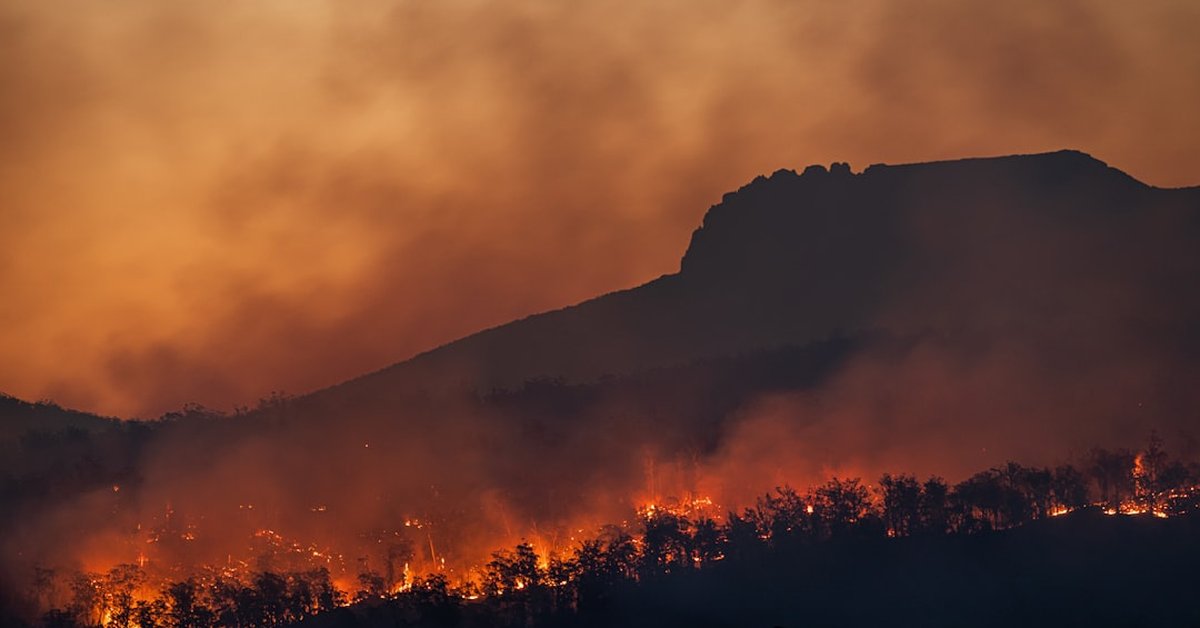




I stepped outside my Philadelphia apartment Tuesday morning, coffee in hand, and immediately felt it — that familiar scratch in my throat, the faint haze blurring the skyline. For a moment, I thought I was back in New York last June, when the sky turned orange and the air tasted like campfire. But no, this was Pennsylvania in February. A Code Orange air quality alert had been issued for much of the state, and the culprit, as it so often is now, was wildfire smoke.
The Pennsylvania Department of Environmental Protection (DEP) declared the Code Orange on Tuesday, warning that fine particulate matter (PM2.5) concentrations would reach unhealthy levels for sensitive groups — children, the elderly, and anyone with respiratory conditions like asthma or COPD. The alert covered a broad swath of the state, including Philadelphia, Pittsburgh, and the Lehigh Valley. And it wasn’t just Pennsylvania. Neighboring states like Ohio and West Virginia issued similar advisories. The smoke, officials said, was drifting down from wildfires burning in Quebec and Ontario — the same regions that turned North American skies apocalyptic last summer.
Look, we’ve been here before. Toronto, New York, DC top pollution list as wildfires rage — that was the headline in June 2023, when Canadian fires sent PM2.5 levels off the charts. Now, in mid-February, it’s happening again. Except this time, it’s winter. That’s the part that makes you pause.
Why February? The Unseasonable Smoke Invasion
Wildfire season in Canada typically runs from May to October. Peak fire danger hits in July and August, when lightning storms and dry conditions create a tinderbox. So why are we seeing Code Orange alerts in February? Because the rules are changing. Fast.
According to the Canadian Interagency Forest Fire Centre (CIFFC), there were over 150 active wildfires in Canada as of mid-February 2024, with dozens burning out of control in British Columbia and Alberta. That’s not normal. In fact, it’s unprecedented. Warmer-than-average winter temperatures, combined with a snowpack that’s far below normal in many regions, have left forests dry and vulnerable. The fires that should have been snuffed out by December are still smoldering — and some are flaring up again.
“We’re seeing what we call ‘zombie fires’ — fires that survive underground through the winter and re-emerge in spring,” explained Dr. Sarah Mitchell, a fire ecologist at the University of British Columbia. “But this year, they’re not waiting for spring. They’re burning actively in February. That’s a direct consequence of a warming climate.”
The smoke from these fires then rides the jet stream south and east, settling over the Great Lakes and the Mid-Atlantic. For Pennsylvania, that means Code Orange days in a month that used to be reserved for snow days.
What a Code Orange Alert Actually Means for You
Let’s get practical. A Code Orange alert from the DEP means the Air Quality Index (AQI) is expected to hit 101 to 150 — the “unhealthy for sensitive groups” range. For most healthy adults, that’s an annoyance, not a crisis. You might feel a tickle in your throat, maybe a headache. But for the 1.2 million Pennsylvanians with asthma, it’s a different story.
“When PM2.5 levels spike, we see a corresponding spike in emergency room visits for asthma attacks and COPD exacerbations,” said Dr. James O’Connell, a pulmonologist at Penn Medicine in Philadelphia. “These particles are tiny — 30 times smaller than a human hair. They go straight into your lungs, then into your bloodstream. It’s not just a lung problem; it’s a cardiovascular problem too.”
During a Code Orange, the advice is simple: avoid strenuous outdoor activity. Keep windows closed. Run your air purifier if you have one. And if you have to go outside — say, to walk the dog or get to work — wear an N95 mask. Yes, those masks we all stocked up on during COVID? They’re useful here too.
The DEP also recommends that schools limit outdoor recess and that employers consider allowing remote work for sensitive employees. But let’s be honest — how many people actually follow that advice? I saw joggers on the Schuylkill River Trail Tuesday morning, huffing and puffing through the haze. Not smart.
This latest event comes on the heels of a forecast that suggested relief might come by Tuesday — and for the Great Lakes, it did. But Pennsylvania’s air remained stubbornly dirty through midweek, as a stalled weather system trapped the smoke near the surface.
The Bigger Picture: A New Normal for the Northeast
Here’s where I get a little frustrated. Every time a Code Orange alert hits — and they’re hitting more often — we treat it like a one-off event. “Oh, it’s just the Canadian fires again.” But this is not a fluke. It’s a pattern.
Data from the EPA shows that while overall air quality in the U.S. has improved dramatically since the Clean Air Act of 1970, wildfire smoke is now erasing those gains in many regions. Between 2016 and 2023, the number of days with unhealthy PM2.5 levels in the Northeast increased by 300%. The primary driver? Smoke from wildfires, most of them in Canada and the western U.S.
And here’s the kicker: Trump administration’s cuts put wildfire research in the crosshairs, which means we have less data, fewer predictive models, and reduced capacity to understand how these fires are evolving. That’s a problem when you’re trying to forecast smoke plumes days in advance.
“We’re flying blind in some ways,” said Dr. Mitchell. “We need better satellite monitoring, more ground stations, and more funding for fire ecology research. Without it, we’re just reacting to disasters instead of preventing them.”
For Pennsylvania, the implications are stark. The state’s geography — nestled between the Great Lakes and the Atlantic, with prevailing westerly winds — makes it a natural collection zone for smoke. As Canadian wildfires become more frequent and intense, Code Orange alerts could become a routine part of Pennsylvania’s winter and spring, not just summer.
“This is not a fluke. It’s a pattern. And we’re not prepared for it.” — Dr. Sarah Mitchell, fire ecologist, University of British Columbia
What Comes Next? A Forecast for the Rest of the Week
The good news? Relief is on the way. A cold front is expected to push through the region by Thursday, sweeping the smoke eastward and out to sea. By Friday, the AQI should drop back into the moderate range — 50 to 100 — across most of Pennsylvania. But don’t pop the champagne just yet.
Long-range models suggest another pulse of smoke could arrive early next week, as winds shift back to the northwest. And with zombie fires still burning in Canada, we could be looking at a spring of Code Orange alerts. Maybe even Code Red — when the AQI hits 151 to 200, unhealthy for everyone.
For now, keep your N95 handy. Check the AirNow.gov website before heading out. And if you’re one of those joggers on the Schuylkill? Maybe hit the treadmill for a few days. Your lungs will thank you.
This is the world we live in now. Not a future prediction — a present reality. And the only way through it is to pay attention, adapt, and demand the kind of research and policy that addresses the root cause: a warming planet that’s turning our forests into tinder.
Frequently Asked Questions
What is a Code Orange air quality alert?
A Code Orange alert means the Air Quality Index (AQI) is forecast to reach 101 to 150, which is considered unhealthy for sensitive groups. This includes children, older adults, and people with lung or heart conditions. During a Code Orange, the general public is less likely to be affected, but sensitive individuals should limit prolonged outdoor exertion.
How long does Code Orange last in Pennsylvania?
Code Orange alerts are typically issued for a 24-hour period, but they can be extended or upgraded if conditions worsen. In the February 2025 event, the alert lasted from Tuesday through Wednesday, with improvements expected by Thursday as a cold front clears the smoke.
Why is wildfire smoke reaching Pennsylvania in winter?
Warmer winter temperatures and reduced snowpack in Canada have allowed wildfires to continue burning through the winter — some are “zombie fires” that smolder underground and re-emerge. The smoke is then carried south and east by the jet stream, settling over the Northeast. This is becoming more common as climate change extends the fire season.