



And just like that, the person who will decide how the U.S. government tells the story of climate change is someone who doesn’t think it’s much of a story at all. Matthew M. Wielicki, a University of Alabama researcher who has publicly dismissed the scientific consensus on global warming as “alarmist,” has been appointed to oversee the next National Climate Assessment (NCA). That’s the big federal report — the one that informs everything from disaster planning to crop insurance rates.
It’s a move that has climate scientists and policy experts raising eyebrows, if not alarms. The NCA, produced every four years by the U.S. Global Change Research Program, is supposed to be the gold standard of climate science for the country. But now, its leadership will come from someone who has argued that the threat of warming is “exaggerated” and has questioned the role of human activity. So what happens when the person in charge of the report doesn’t fully buy its premise?
Who Is Matthew Wielicki — and What Does He Believe?
Wielicki is a research scientist at the University of Alabama in Huntsville, specializing in paleoclimatology and geochemistry. His academic work is legitimate — he’s studied ancient climates using sediment cores and isotope data. But his public commentary has veered sharply into climate contrarianism. In op-eds and social media posts, he’s called the Intergovernmental Panel on Climate Change (IPCC) reports “a political document” and suggested that the warming observed over the past century is largely natural. He’s also questioned the severity of impacts like sea-level rise and extreme weather.
Look, it’s one thing to have a skeptic in the room. Scientific debate is healthy. But the NCA isn’t a journal club — it’s a congressionally mandated document that shapes policy at the federal, state, and local levels. It’s used by the Department of Defense to assess risks to military bases, by the EPA to justify regulations, and by farmers to plan planting seasons. Putting a critic in charge of that process raises a fundamental question: will the report downplay the dangers? Or will Wielicki separate his personal views from his professional duties?
He hasn’t said much since the appointment was announced. But his past statements are on the record. In a 2023 piece for a conservative think tank, he wrote that “the climate crisis narrative has caused more harm than good,” arguing that it diverts resources from “real environmental problems.” That kind of rhetoric doesn’t exactly inspire confidence in those who worry about the independence of the assessment.
What the National Climate Assessment Actually Does
If you haven’t read the NCA — and most people haven’t — it’s a massive, multi-volume report that compiles the latest climate science for the United States. The fourth NCA, released in 2018 under the first Trump administration, concluded that “climate change is already affecting every region of the country and key sectors of the economy.” It warned of more intense hurricanes, worsening wildfires, and rising seas. The fifth NCA, published in 2023 under Biden, was even more stark: it said the U.S. is warming faster than the global average.
Now, the sixth NCA is in early planning stages. And Wielicki will have a say in who writes it, what data gets included, and how risks are framed. That’s a huge responsibility — and a huge source of tension. Scientists who have contributed to past assessments are worried. “The NCA is supposed to be an objective synthesis of the best available science,” says Dr. Katharine Hayhoe, a climate scientist at Texas Tech University. “If the process is perceived as politicized, it undermines the credibility of the entire document. That’s dangerous when communities depend on this information to make life-or-death decisions.”
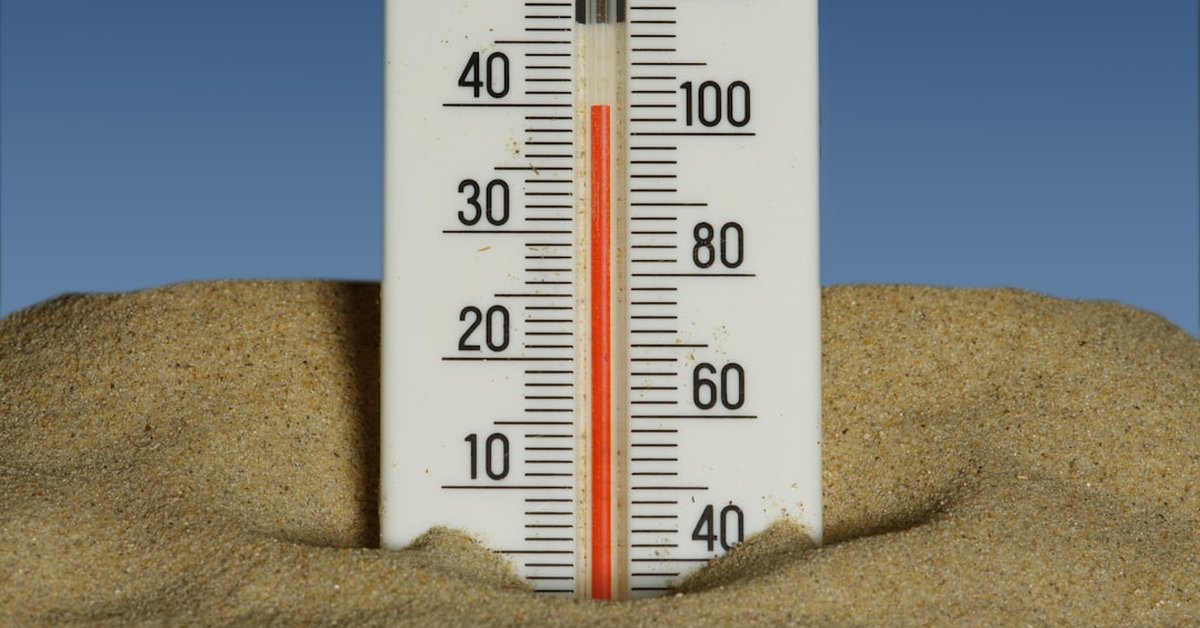
The timing is particularly sensitive. The U.S. has just experienced its hottest year on record — 2024 shattered previous marks. Extreme weather events are piling up. In the UK, an unprecedented heatwave has scorched through an eighth day above 34°C, with no relief in sight. Meanwhile, the Amazon basin — a vital carbon sink — is losing its ability to regulate the climate, and a new study warns that global warming threatens its medicinal plants. These aren’t abstract problems. They’re happening now. And the NCA is supposed to help us understand and respond to them.
Pushback from the Scientific Community
The appointment has drawn swift criticism. More than 100 climate scientists and former government officials signed an open letter to the White House, calling Wielicki’s selection “a direct threat to the integrity of the U.S. climate assessment process.” The letter notes that Wielicki is not a senior scientist in the field of climate dynamics, but rather a paleoclimate researcher whose public statements contradict the overwhelming consensus.
Dr. Brenda Ekwurzel, director of climate science at the Union of Concerned Scientists, puts it bluntly: “This is like putting a tobacco-industry advocate in charge of the Surgeon General’s report on smoking. The NCA has always had rigorous peer review and bipartisan credibility. Putting someone who has called the science ‘alarmist’ in the driver’s seat signals that political ideology matters more than evidence.”
But there are also defenders. Some conservative commentators argue that Wielicki brings a necessary alternative perspective. They say the NCA has become too focused on catastrophic scenarios and needs more balance. The question is: balance against what? The IPCC and every major national academy of sciences in the world agree that climate change is real, human-caused, and dangerous. The so-called “skeptic” position is not a legitimate scientific minority — it’s a political one.
What This Means for the Report — and for You
Let’s be clear: the NCA isn’t just a document that sits on a shelf. It directly affects how the federal government allocates resources for disaster preparedness, how states shape their coastal management plans, and how insurance companies calculate flood risk. If the next assessment downplays the role of climate change in extreme weather, that could lead to underinvestment in adaptation measures. Imagine a coastal city like Miami or Norfolk using a watered-down report to justify not raising seawalls. The consequences would be measured in property damage — and lives lost.
There’s also a subtler danger: erosion of public trust. The NCA is one of the few climate documents that most Americans have heard of. If it becomes politicized, people may start to doubt all climate information. That’s a gift to misinformation campaigns. And it would make it even harder to build the political will for emissions reductions or adaptation funding.
Wielicki has not yet outlined his vision for the sixth NCA. He hasn’t given interviews since the appointment, though his university declined to comment when reached. The U.S. Global Change Research Program said in a statement that the selection was made through a “standard process” and that Wielicki “brings valuable expertise in paleoclimate reconstruction.” But the process itself has been criticized as opaque — there was no public announcement until after the appointment was finalized.
What Comes Next
So here’s where we are: the next National Climate Assessment will be shaped by someone who has publicly doubted the severity of climate change. The report is expected to take years to complete, with drafts subject to review by a separate panel of experts. But the director sets the tone. They choose the authors, frame the questions, and decide what evidence gets highlighted.
Some legal experts argue that if Wielicki tries to suppress or alter scientific findings, he could face challenges under the Information Quality Act or even whistleblower complaints from federal scientists. But that’s a slow and uncertain path. In the meantime, climate impacts aren’t waiting for the bureaucracy. The UK is sweltering under heatwaves that would have been unthinkable a decade ago. The Amazon is losing its medicinal treasures. The oceans are rising. The question is whether the U.S. will continue to have an honest, science-based assessment of these threats — or whether that honest assessment will become another casualty of political polarization.
This isn’t just about one appointment. It’s about whether the United States can still trust its own government to tell the truth about the most pressing environmental challenge of our time. And right now, that trust just took a hit.
Frequently Asked Questions
What is the National Climate Assessment?
The National Climate Assessment (NCA) is a congressionally mandated report issued every four years by the U.S. Global Change Research Program. It summarizes the state of climate science and its impacts on the United States, covering topics like extreme weather, agriculture, health, and infrastructure. It’s used by federal agencies, state governments, and businesses to plan for climate risks.
Why is Matthew Wielicki’s appointment controversial?
Wielicki has publicly described climate warnings as “alarmist” and questioned the role of human activity in global warming. Critics worry that his personal views could influence the content and framing of the next NCA, undermining its scientific credibility and political neutrality. Supporters argue he brings a needed alternative perspective.
Can Wielicki change the conclusions of the climate assessment?
As the director, Wielicki can influence which scientists are selected to author the report and how the scope is defined. However, the NCA undergoes extensive peer review and requires sign-off from multiple federal agencies. Still, the director sets the overall tone and can shape priorities, which could lead to downplaying certain risks if he chooses to do so.